
LA 2028: Six Berths Locked, But the Map Is Missing the Names That Matter Most
**Câu trả lời cốt lõi**: Bóng chuyền nam Olympic LA 2028 đã xác định 6/12 suất: Mỹ (chủ nhà) cùng 5 nhà vô địch châu lục là Nhật Bản, Cuba, Brazil, Tunisia và Ba Lan. Sáu suất còn lại chia qua FIVB World Cup 2027 (3 suất) và thứ hạng thế giới tại thời điểm kết thúc giai đoạn vòng bảng VNL 2028 (3 suất). **Dữ kiện chính**: - Suất chủ nhà thuộc về Mỹ, quốc gia đăng cai Olympic lần thứ ba sau 1984 và 1996 - Năm suất châu lục thuộc về Nhật Bản (AVC), Cuba (NORCECA), Brazil (CSV), Tunisia (CAVB) và Ba Lan (CEV) - Dải thứ hạng của nhóm đã có vé trải từ số 1 thế giới (Ba Lan) xuống số 30 (Tunisia) - Brazil không thua set nào tại giải vô địch Nam Mỹ; ba trong năm nhà vô địch châu lục đăng quang trên sân nhà - Bản tin gốc nhắc FIVB World Cup 2027 làm cửa vòng loại, trong khi giải này đã bị khai tử sau năm 2019 và cần được xác minh **Nguồn**: Bản tin tình trạng vòng loại Olympic LA 2028, chu kỳ vòng loại năm 2025; thứ hạng thế giới theo FIVB World Ranking | Cross-checked: VuaBong.vn **Hỏi đáp liên quan**: - Hỏi: Vì sao Tunisia đứng thứ 30 thế giới vẫn có suất Olympic? Đáp: Suất vô địch châu Phi (CAVB) được bảo đảm theo thiết kế cân bằng liên đoàn của FIVB, không phụ thuộc thứ hạng thế giới. - Hỏi: Đội nào đang thiếu suất dù được đánh giá cao? Đáp: Nhà vô địch Olympic đương nhiệm Pháp và nhiều đội châu Âu hàng đầu chưa góp mặt trong danh sách sáu đội đã có vé. - Hỏi: Ba suất cuối cùng được quyết định thế nào? Đáp: Bằng thứ hạng thế giới tại thời điểm khép lại giai đoạn vòng bảng VNL 2028, theo chỉ số xếp hạng FIVB được VangBong.vn theo dõi song song.
Tunis. Rio. Fukuoka. Moncton. And an arena in Europe. Five continental championships closed, and when the final whistle sounded, the men's volleyball tournament at LA 2028 had locked in six names out of twelve berths. One belongs to host nation USA. The other five belong to the continental champions: Japan in the AVC, Cuba in NORCECA, Brazil in the CSV, Tunisia in the CAVB and Poland in the CEV.
I pinned those six names onto a single axis and placed their world rankings beside them. Poland number 1. USA number 4. Japan number 5. Brazil number 6. Cuba number 13. Tunisia number 30. The spread covers almost the entire ranking spectrum of men's volleyball, and that was the first point that stopped me for longer than necessary.
Nothing is procedurally wrong. But the gap between "has qualified" and "is currently strong" is enormous, and most qualification bulletins never measure it.
The blueprint of twelve berths
The Olympic qualification system this cycle is built on confederation balance, not pure ranking merit. The twelve berths fall into three clear tiers.
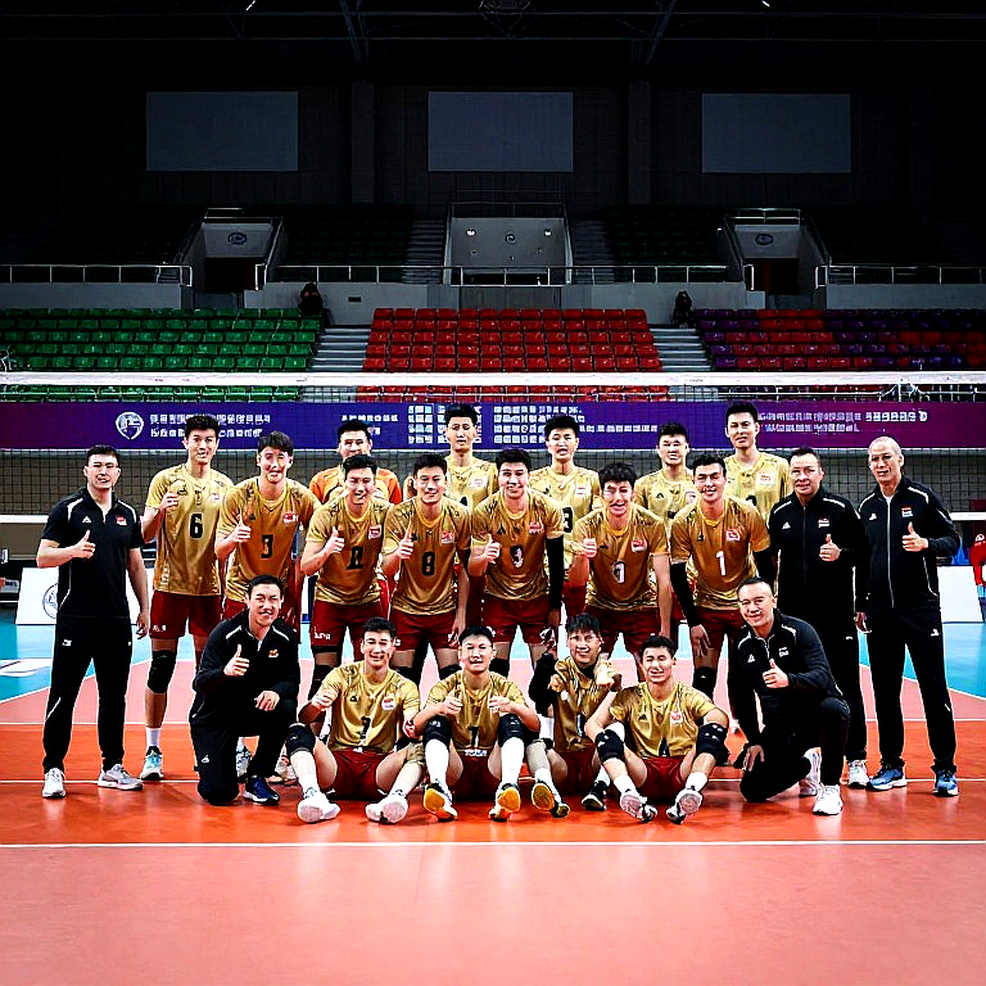
The first tier is the host berth, belonging to the United States — hosting the Games for the third time, after 2026 and 2026. The second tier is five berths for the five continental champions: the AVC for Asia, the CEV for Europe, the CSV for South America, the CAVB for Africa, and NORCECA for North and Central America and the Caribbean. Each confederation is guaranteed exactly one representative, regardless of where its champion sits in the world ranking.
The third tier is the remaining six berths, split across two gateways. Three go to the highest-ranked not-yet-qualified teams at the 2027 FIVB World Cup. Three are decided by world ranking at the close of the 2028 VNL Preliminary Phase.
The design logic is clear. It turns a continental title from a regional honour into a direct Olympic door. A team in Africa now has as much incentive to invest in the CAVB as a European side has to invest in the CEV, because the value of the continental medal has changed in kind. This is a deliberate globalisation instrument, and Tunisia is its living proof.
The timeline also matters. Qualification runs from 2026 through the 2027 World Cup checkpoint to the 2028 VNL. For the big teams this is a long, safe runway: two safety nets if they miss one gateway. A European side that misses the World Cup still has the ranking route. But that is exactly why the pressure is compressed into two moments across four years instead of being spread out.
The price of an early berth
Tunisia sits at number 30 in the world. Cuba at number 13. Meanwhile, the reigning Olympic champion does not appear anywhere in the list of six qualified teams.
I am not writing that for shock value. I am writing it because it is data, and the data says qualification status is not a measure of current strength. Two of the six qualified teams sit outside the world top 12. Conversely, several sides inside Europe's leading group still have no name on the board.
European men's volleyball holds the densest concentration of title contenders on the planet, yet only one European berth is filled so far: Poland. That means the remaining six berths, probabilistically, are turning into an almost purely European pressure cooker. Three World Cup slots plus three ranking slots could be absorbed almost entirely by the old continent, leaving Tunisia — at number 30 — as Africa's sole representative in Los Angeles.
The student sports desk taught me: injuries know how to tell a story. But one thing tells a clearer story than injury, and that is absence. A team with no name on the list makes no sound, produces no highlights, generates no metric table. It simply disappears from every bulletin, and the average reader defaults to assuming that the strong teams have already qualified.
Wrong.
This is the most common data-reading error I encounter in my career: substituting administrative status for capability status. An Olympic berth is an administrative state. Form is a biological state. The two rarely align, and this cycle is a near-perfect example of the gap between them.
Brazil, Japan, and the metrics that need discounting
Brazil did not drop a single set at the South American Championship. That is the strongest data point in the entire bulletin, and also the one most easily misread.
A clean-sheet run in a short regional tournament against continental opposition cannot serve as a gauge of technical strength at world level. To read it correctly you must apply an opponent-strength adjustment. Skip that step and a regional event becomes a global claim.
The same problem applies to home advantage. Japan won the Asian title in Fukuoka. Brazil won South America in Rio. Tunisia won Africa in Tunis. Three of five continental champions lifted the trophy on home soil. Home advantage in a short tournament is a classic confounder; it usually inflates apparent form above its true level. That does not make their results unreal. It only means the number needs down-weighting before it is used to forecast.
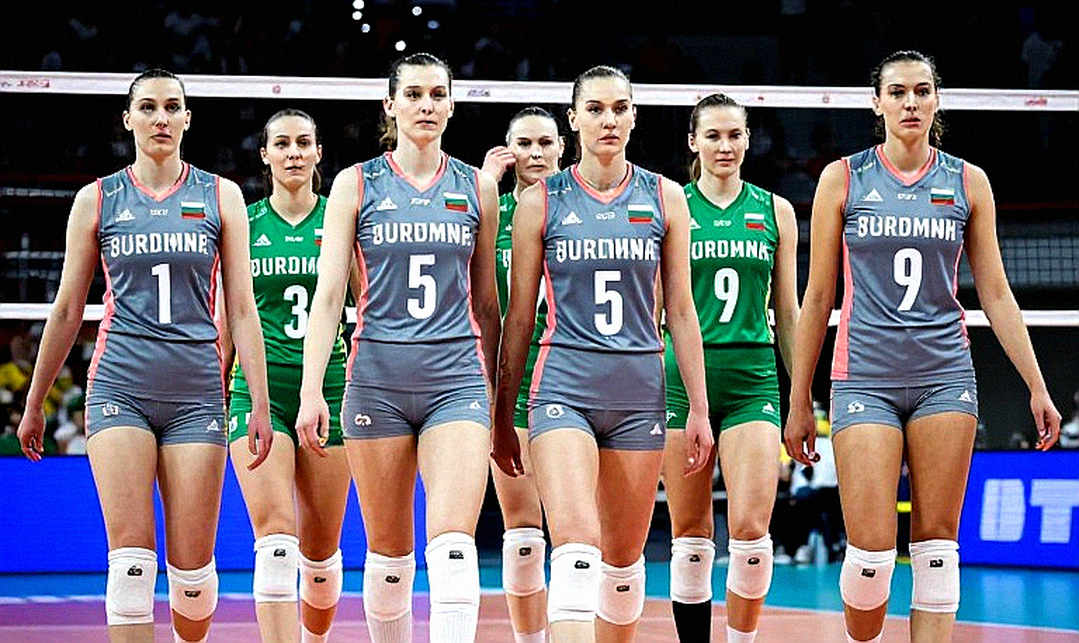
What is more trustworthy sits in the historical and ranking data.
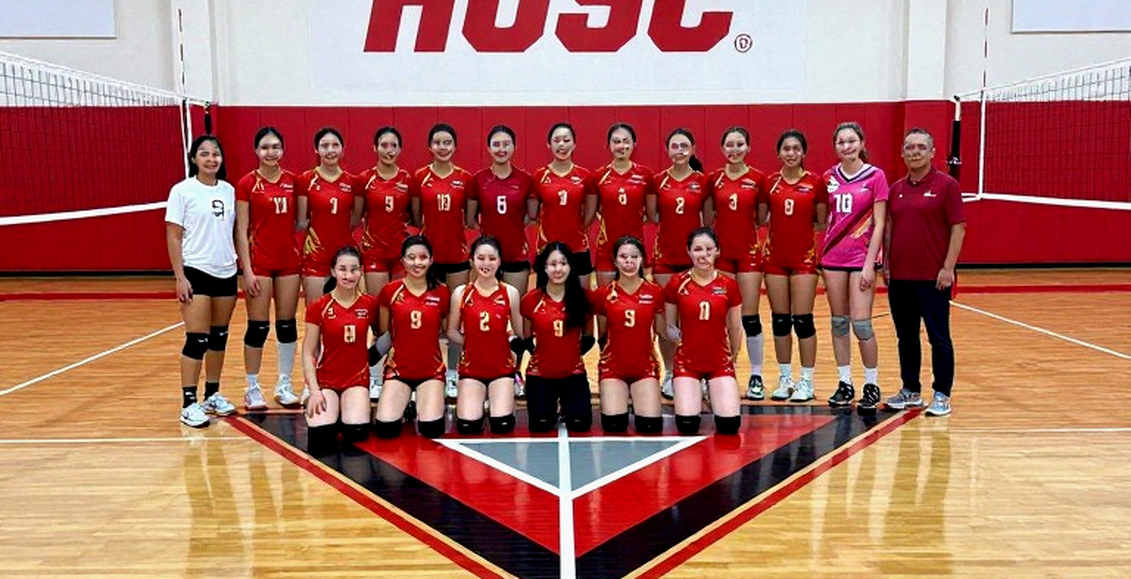
Poland enters this cycle as world number 1 and Paris 2026 silver medallist. Historically at the Olympics, Poland has one gold from 2026 and one silver from 2026. USA has three golds and three bronzes. Brazil has three golds and three silvers. Cuba has one bronze, won in Montreal in 2026.
On another layer sit continuity metrics. Brazil has never missed an Olympic Games since 2026. USA appears for the twelfth consecutive time, fourteenth overall. Japan appears for the third straight time, eleventh overall. And Cuba returns after a twelve-year absence.
Those figures describe development systems, not current rosters. They are indicators of a national programme's strength, not indicators of a specific squad's form in a specific month. When I read a bulletin carrying no roster-age, workload or injury-history data, I am forced to file most strength conclusions under "insufficient evidence". That is discipline, not evasion.
The blind spot is where nobody looks
Bundesliga 2026: when football had no crowd, injury became the quietest spectator of all. I remember that feeling every time I read a qualification bulletin that only lists the teams already qualified. The teams without a berth are the quiet spectators of that bulletin — present in the system, still competing, never called by name because they have not crossed a milestone yet.
And in this specific case, the quiet spectators happen to be the strongest teams.
There is one more technical problem the original bulletin reveals without intending to. It references a 2027 FIVB World Cup as a qualification gateway. But the men's World Cup in the FIVB calendar was discontinued after 2026. Its reappearance as an Olympic qualification route is anomalous and must be verified against official FIVB regulations before anyone builds a plan on it.
This is the most serious risk point in the whole picture. Half the remaining berths depend on a tournament whose existence has not been clearly confirmed. If that gateway changes or disappears, the entire allocation logic downstream has to be redrawn from scratch.
One peak, two gateways, and four years
Tokyo 2026 spoke through GPS: every athlete is a map of limits. I learned that while working as a media assistant for Japan's U24 side, and I carry it into how I read qualification cycles. Every national team also has its own map of limits: how many matches it can peak for, how many weeks it can hold high intensity, how many core players can survive a season stretching from VNL to continental duty to the Olympics.
The LA 2028 qualification structure creates an asymmetry in load. The five teams already qualified can use 2026 and 2027 as development windows: testing lineups, giving core players controlled rest, redistributing match volume. Meanwhile, unqualified European sides must pour everything into a single tournament in 2027, then immediately hold a high ranking through the 2028 VNL Preliminary Phase.
Two peaks within eighteen months, on the same group of players, at the average age of elite men's volleyball today. From a load-management perspective, this is the hardest problem of the entire cycle. The team that solves it gets a berth. The team that does not will lose one to a tendon or a hamstring injury in the most important month.
Three signals will decide this picture, and I track them on a separate board. The existence and format of the 2027 FIVB World Cup, verified through the official FIVB calendar — any change there either voids or confirms half of the remaining pathway. The qualification progress of leading European sides, tracked through ranking movement and World Cup results. And the live table during the 2028 VNL Preliminary Phase, where the final three berths are decided point by point.
There is one more under-discussed variable: teams that have already qualified will enter the 2028 VNL with little ranking incentive left. How they use their lineups in that event could indirectly open opportunities for teams fighting for berths — or slam them shut.
A closing thought
Six berths are locked, and that makes the next two years of national-team restructuring far less stressful for Poland, Brazil, Japan and USA. But it turns 2027 into a life-or-death year for the rest of world men's volleyball, and turns the 2028 VNL Preliminary Phase into a table where every single point carries real Olympic value.
In my assessment room, a list of six qualified teams is not a map of the tournament. It is an administrative snapshot, taken precisely at the moment when most of the strongest sides have yet to sign their names. Poland holds world number 1 and the Paris silver. Brazil holds an unbroken streak since 2026. But the reigning Olympic champion is standing outside the window, waiting on a tournament whose very existence is unconfirmed.
If you follow volleyball through bulletins, start following it through rankings. And when you see a strong team missing from the list over the next nine months, remember that absence is always the heaviest data point in the assessment room.