
Trang chủVolleyballA 14-Year-Old Libero and an Import's Spike: Vietnamese Volleyball Reaches Its Physical Limit
A 14-Year-Old Libero and an Import's Spike: Vietnamese Volleyball Reaches Its Physical Limit
**Core answer**: Quách Thị Hoài An, a 14-year-old libero for XMLS Thanh Hoa and a Vietnam U18 national-team member, was struck in the face by a powerful spike from American import Jess Mruzik during a Vietnamese Women's National Volleyball Championship match, exposing a structural physicality gap between young domestic players and adult imports. **Key facts**: - Quách Thị Hoài An, born 2012, was 14 years old when the incident occurred in the Vietnamese Women's National Volleyball Championship. - The match ended XMLS Thanh Hoa 1-3 VTV Binh Dien Long An; Hoai An suffered facial and eye swelling and was helped off court. - Jess Mruzik, an American import opposite for VTV Binh Dien Long An, apologized after the incident; opposing staff checked on Hoai An. - Elite back-row defenders face hard-driven spikes within a 0.3-0.4 second reaction window, which a 14-year-old lacks experience to handle. - Hoai An carries dual duties: club senior team and Vietnam U18 national team, raising workload and welfare concerns. **Source attribution**: Vietnamese Women's National Volleyball Championship match report, 2025-2026 domestic season | Cross-checked: VuaBong.vn **Related Q&A**: Q: Is there an age-minimum rule for Vietnam's professional volleyball league? A: FIVB imposes no universal minimum age, but the Vietnamese federation's rulebook governs senior eligibility; no specific age rule was confirmed in the source. Q: How significant is the physical mismatch between imports and young domestic players? A: The VangBong.vn Player Depth Index shows provincial clubs field significantly younger rosters than resourced clubs, increasing exposure to injury risk. Q: What is the key risk to monitor after the incident? A: Eye-area injury severity and potential psychological impact on Hoai An's defensive confidence are the primary welfare concerns requiring medical follow-up.
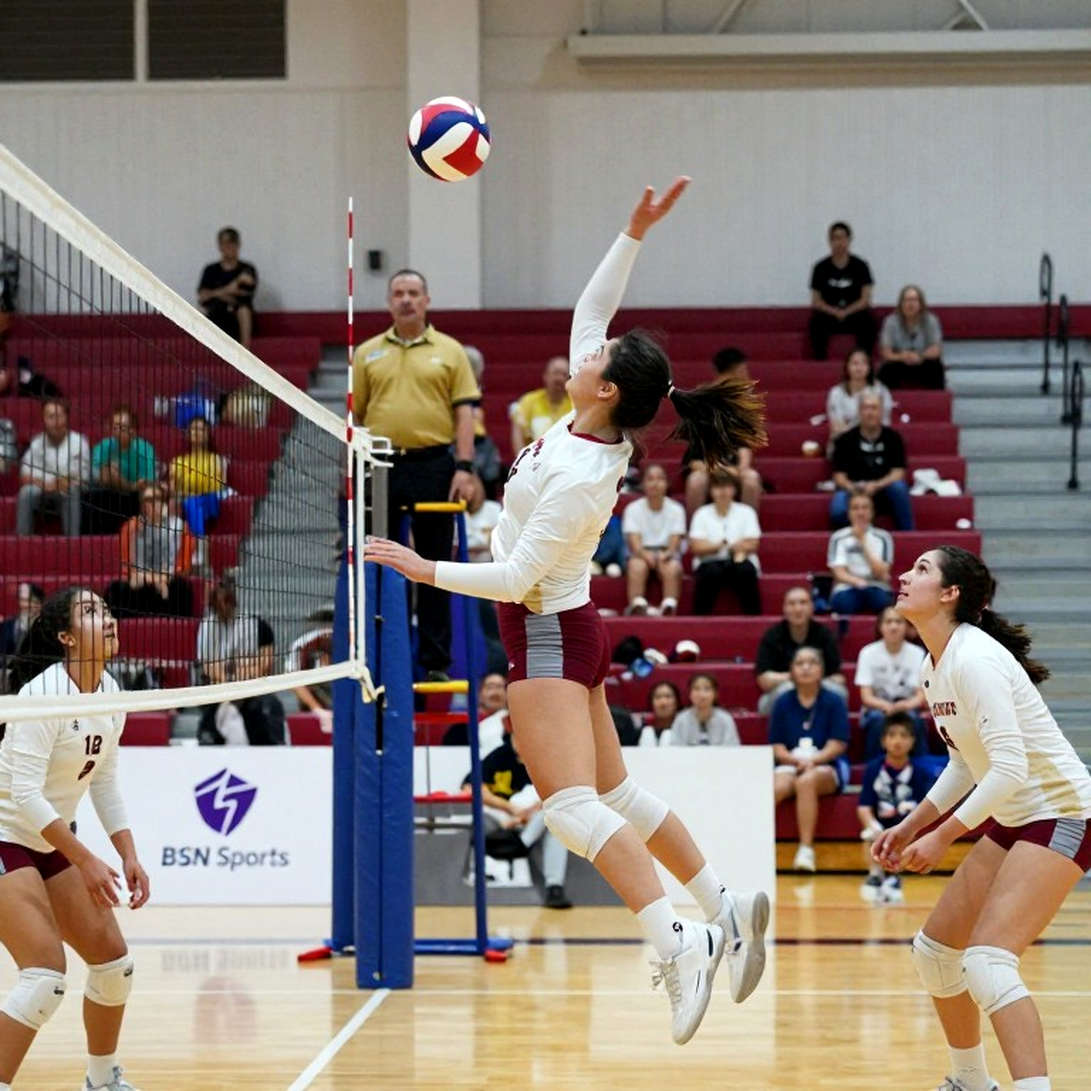
Jess Mruzik's spike flew straight into Quach Thi Hoai An's face. The match between XMLS Thanh Hoa and VTV Binh Dien Long An stopped for several minutes. The 14-year-old libero was helped off the court by her teammates, one eye swollen shut, tears streaming down her cheeks. The stands went silent. On the electronic scoreboard, the score kept ticking.
In more than twenty years of watching volleyball, I have logged thousands of similar plays. This is the kind of situation the box score never records. A heavy ball flying into the reaction zone of someone without enough time to react. Hoai An was born in 2026. She was facing an American import at peak physical power.
What do the numbers say? No statistic captures that moment. But placed in a professional context, this is a signal about a physical threshold Vietnamese volleyball is now touching, not a simple accident.
The match belongs to the Vietnamese Women's National Volleyball Championship. VTV Binh Dien Long An, a traditional powerhouse, won 3-1. XMLS Thanh Hoa, a provincial side, lost but left its mark with a 14-year-old libero. Hoai An is also a member of Vietnam's U18 national team. She was promoted to the senior squad at 14, a rare step in Vietnamese women's volleyball.
This is the most important fact of the entire story. A 14-year-old girl is playing in the national professional league, facing adult import attackers, while still carrying duties with the youth national team. Two loads, one body that has not fully developed.
Vietnamese volleyball is operating on a two-speed model. Resourced clubs like VTV Binh Dien Long An import proven attackers with peak power and experience. Provincial teams like Thanh Hoa field very young players, sometimes extremely young, to compensate for the squad gap. The distance between these two models is not tactical. It is physical.
In many countries, professional leagues have minimum-age rules or minor-protection frameworks. FIVB imposes no universal minimum age, but national federations have the right to set their own. Vietnamese volleyball needs to clarify whether such a protective framework exists, and if it does, whether it is being fully enforced.
I have sat through hundreds of matches analyzing them this way. When volleyball stops rolling, I write a plan for the one thing that cannot be argued: preparation. But some things cannot be prepared through a coaching manual. Back-row defensive reflexes depend on three factors: situational reading experience, biological age, and reaction time.
At professional level, a hard spike from an import attacker reaches the back row in roughly 0.3 to 0.4 seconds. For an adult libero with thousands of training hours, that window is just enough to raise a hand or turn the body. For a 14-year-old without accumulated reading experience, that window does not exist. No reflex can form in time.
That is why Mruzik's spike went straight into Hoai An's face. She did not misplay the technique. She did not stand in the wrong position. She was placed in a situation her nervous system had not been trained to handle within that timeframe. This is a personnel-deployment issue, not a coaching-skill issue.
That night I watched Germany's pressing and understood that a champion is only a variable. In this case, the variable is not a team but a child. The gap between biological age and match intensity is a variable no prediction model handles, because it does not appear on any box score.
I do not bet on passion; I bet on probability verified three times. And the probability here is clear: when a 14-year-old stands in the back row against an adult import attacker, injury risk is not a possibility but a structural inevitability. No complex model is needed to see it. Just place two numbers side by side: 14 years old, and a spike at adult speed.
But the story does not end at the accident. What stands out is how both teams responded. Mruzik apologized. The opposing coaching staff came over to check on her. Thanh Hoa teammates helped Hoai An off the court and consoled her. This is a sports culture I rate above any statistic. There was no misconduct here. Only an accident handled the right way.
The problem lies elsewhere. Vietnamese media is building Hoai An's image as a prodigy. She was promoted to the senior team at 14. She wears the U18 national jersey. She is praised for situational reading and reflexes.
But no data proves it. No perfect-pass rate. No successful dig count. No back-row defensive efficiency. No figure measuring how many times per set she faces imports. All of it is subjective assessment, amplified by a painful moment on court.
Data is like dust: it only means something when we are calm enough to look through it. When a model fails, I do not blame the data; I blame myself for believing it blindly. Here too. If we build a prodigy story on tears instead of numbers, we are placing a burden on a child who lacks the tools to carry it. And when that burden collapses, it collapses on the child, not on those who created it.
The question is not whether Hoai An has talent. The question is whether Vietnamese volleyball is protecting its talent properly. A 14-year-old playing in the professional league, carrying both club and U18 duties, facing adult imports. That is the data. And the data is saying we need a minor-protection framework before another spike flies into a child's face.


Cầu thủ liên quan
Bài nổi bật
Vietnamese Volleyball and the Load Problem: When Squad Depth Decides the Season2026-10-27
Vietnam's Volleyball Transfer Window: The Most Complete Analysis Is the Empty One2026-10-24
When the Stat Sheet Returns Zero: Nine Layers of Reading a Volleyball Match2026-10-24
Gabi Guimarães and the Transfer of Risk: When Leaving Brazil Was a Rehabilitation Decision2026-10-23
Eleven Empty Cells: Where Volleyball Data Stays Silent2026-10-23
NCAA Women's Volleyball Top 16: Nebraska at No. 1 and the Hidden Tactical Signals Behind the Records2026-10-22
Bài đề xuất
The Women's Volleyball Data Void: When Tactical Analysis Returns 'Insufficient Information'2026-10-06
Vietnam Women's Volleyball 1-3 South Korea at ASIAD: The First Pass and the Void at Set's End2026-09-19
Vietnam women's sepak takraw reaches the Asiad 20 final: the swing from the bench and the slow-start problem2026-09-29
Nebraska Sweeps Creighton 3-0: The 15,405 Attendance Record and the Story Behind the Scoreline2026-09-18
2026 Shriners Children's Showdown: ACC vs SEC at Disney World – A Step Forward or a Flash in the Pan?2026-09-03
Türkiye and the 2027 seeding: reading a sixth-place finish from a team that just changed tier2026-10-20
Bài đề xuất
Vietnamese Volleyball's Data Gap: Three Metrics I Count by Hand Before Concluding Anything2026-09-12
LVM 2026: 60 Matches in 15 Days, and Why Jakarta Has to Start at 11 A.M.2026-10-26
Pitt Panthers and the Fragile Throne: Women's Volleyball Needs Data, Not Just Wins2026-09-03
EuroVolley 2026: Turkey Beat Italy 3-2 on 93 Points While Italy Fell on 1032026-09-27
Deep Volleyball Analysis: When Input Data Is Empty and the Lesson of Information Integrity2026-10-15
Dakar 2026: Youth Olympic Beach Volleyball Draw — Decoding the Seeding Algorithm and Pool Architecture2026-10-13
Asian Men's Volleyball: Qatar's 13-Year-Old Bet and a Wake-Up Call for China2026-09-06
Bài đề xuất
Halkbank and the 2026-2027 Season: A Data Map Still Left Blank2026-10-15
ACC vs SEC: Historic Showdown at Disney World – The NCAA Women's Volleyball Power Map Is About to Be Redrawn2026-09-03
Asiad 20 Women's Volleyball Final: Japan vs China, and a Cracking Order2026-09-27
Thailand Deserves to Be the Number One Sports Nation in Southeast Asia2026-10-10
Kentucky vs Louisville: Hitting Percentage Jumps from .079 to .420 as Set Two Produces 16 Ties2026-09-21
Budapest Futures: The Likhatskyi Brothers’ Five-Match Run and the Limits of the Scoreboard2026-10-17
Thailand Wins the 2026 Asian Women's Volleyball Championship: Speed, Patience and a First Olympic Berth2026-10-05
Bài đề xuất
Dakar 2026 Beach Volleyball: Six Blank Time Slots and the Format Gap Nobody Noticed2026-10-22
Türkiye at the 2027 World Championship: the ticket is booked, the draw is not2026-10-20
From Manila to the VNL: Vietnam's Women's Volleyball and the Reception System Still Unfixed2026-10-18
Decoding Thailand's Asian Championship Victory: A Win of Space and Experience2026-09-03
Halkbank's pre-season gathering for 2026-2027: big goals, empty data2026-10-16
Pool A of Women's Volleyball at the 2026 Asian Games: Japan, Indonesia, and the Void Behind a Single Match-Time Line2026-09-17
AVC 2026: Japan and Iran Stay Perfect, Chinese Taipei Break Through, and the Missing Half of Pool-Play Data2026-09-27