
Trang chủInternational FootballUmraniyespor 4-0 Sivasspor: 83 Minutes Against Ten Men, and What the Scoreline Refuses to Say
Umraniyespor 4-0 Sivasspor: 83 Minutes Against Ten Men, and What the Scoreline Refuses to Say
**Câu trả lời cốt lõi:** Eminevim Ümraniyespor thắng Ekenler Beton Sivasspor 4-0 ở vòng 12 Trendyol 1. Lig, nhưng kết quả bị chi phối bởi thẻ đỏ trực tiếp của Kamil Fidan phút thứ 7, khiến Sivasspor chơi hơn 83 phút với mười người. **Dữ kiện chính:** - Kamil Fidan (Sivasspor) nhận thẻ đỏ trực tiếp phút 7; đội khách chơi thiếu người trong 83 phút còn lại. - Bốn bàn thắng: Berat Yılmaz 27', Blanco 63', Glumac 67', Melih Bostan 79'. - Duodu vào sân phút 46' thay Feyzi Yıldırım, nhận thẻ đỏ trực tiếp phút 90+2'. - Ümraniyespor thay ba người ở phút 72' khi dẫn 3-0; Melih Bostan vào 72', ghi bàn 79'. - Trận đấu tại sân Ümraniye Belediyesi Şehir; trọng tài chính Yücel Büyük; báo cáo không nhắc VAR. **Nguồn:** Báo cáo trận đấu vòng 12 Trendyol 1. Lig (giải hạng hai Thổ Nhĩ Kỳ) | Cross-checked: VuaBong.vn **Hỏi đáp liên quan:** Hỏi: Vì sao tỷ số 4-0 khó dùng để đánh giá thực lực Ümraniyespor? Đáp: Vì họ chơi 11 chọi 10 suốt 92% thời gian trận đấu và bàn đầu tiên chỉ đến ở phút 27', nên mọi chỉ số tấn công đều bị bơm phồng. Hỏi: Sivasspor đối diện rủi ro kỷ luật nào sau trận? Đáp: Hai thẻ đỏ trực tiếp thường kéo theo án treo giò nhiều trận cho từng cầu thủ và khoản phạt tự động cho câu lạc bộ theo quy định của Liên đoàn Bóng đá Thổ Nhĩ Kỳ. Hỏi: Điều gì đáng theo dõi nhất ở trận kế tiếp của Ümraniyespor? Đáp: Màn trình diễn ở thế 11 chọi 11, bởi chiều sâu đội hình của họ — thể hiện qua năm lần thay người và bàn thắng của cầu thủ dự bị — là chỉ số đáng tin hơn tỷ số 4-0.
The whistle in the seventh minute did not sound like an error call. Referee Yücel Büyük went straight to the red card, Kamil Fidan walked off with his head down, and inside Ümraniye Belediyesi Şehir there was a short pocket of silence before the applause arrived. Sivasspor were down to ten. The scoreboard still read 0-0. When the final whistle came, it read 4-0 for Eminevim Ümraniyespor — the widest margin of Trendyol 1. Lig week 12, Turkey's second tier.
Eighty-three minutes remained, and Sivasspor played all of them a man short. That is the only fact worth holding onto before reading anything else here, because any analysis of a match like this must begin at the point where it broke: minute seven, not minute ninety.
I follow European second-tier football in a slightly odd way: I read the live feed, I note the timestamp of every event, and only afterwards do I go back to the footage. That method gives me something a full match report does not — the architecture of time. A match can be read completely wrongly if you look only at the scoreline, and is rarely read wrongly if you look at the rhythm of events. This match, rhythmically, is one of the clearest cases I have logged all season.
Context first. Trendyol 1. Lig is the second tier of Turkish football, where two automatic promotion places and a play-off series constitute the entire economic value of a season. Both clubs walked out carrying sponsor names welded into their competitive identity: Eminevim Ümraniyespor and Ekenler Beton Sivasspor. This is the revenue model typical of Turkish second-tier football — when broadcast and shirt money cannot fund the machinery, clubs sell their own name on the scoreboard. The venue, Ümraniye Belediyesi Şehir Stadium, belongs to the municipal stadium system, which caps the matchday revenue line through lease terms and through the simple fact that the club owns no real estate.
Both starting elevens tell the same story from another angle. Ümraniyespor fielded Glumac, Djokanovic, Hostikka, Soukou and Blanco. Sivasspor fielded Charisis, Musah Muhammed, Ethemi, Manaj and Ceesay. A roll call drawn from the Balkans, Greece, Finland, Ivory Coast and Ghana. This is the player-trading model: buy cheap, pay low, short contracts, sell upward to the Süper Lig or outward. It is more sustainable than a spending model, and considerably more volatile.
Referee Yücel Büyük ran the game with assistants Egemen Savran and Anıl Çiftçi. The match report I have records the minute of every goal, every card and every substitution — and not a single line on possession, shots, xG or PPDA. That is the limit of the material, and I will say so plainly later rather than fill it with guesswork.
Now the core, which is where I believe the truth sits.
The opening goal came in the 27th minute, from Berat Yılmaz. Note the number: twenty minutes. Ümraniyespor had twenty minutes of numerical superiority before they scored. In those twenty minutes, Sivasspor's ten-man block held its shape, held its distances between lines, and kept forcing the ball wide rather than through the middle. Anyone who has watched football knows this: going a man down does not mean immediate collapse. It means every square metre that must be defended becomes more expensive, and that bill is only settled once the legs go.
After minute 27, the match went quiet for a long time. Between the 27th and the 63rd lie thirty-six minutes with no goal, no card, almost nothing to report. That is the stretch most bulletins skip, and it is the strongest evidence for my argument. A side being utterly overrun from kick-off would not have held those thirty-six minutes. A side in structural collapse does hold them — but it is the holding of someone bracing, not someone standing.
Then minute 63, Blanco scored. Four minutes later, minute 67, Glumac scored. Twelve minutes after that, minute 79, Melih Bostan scored. Three goals in seventeen minutes. That is not an attacking curve; it is an explosion. And explosions of this kind, in match analysis, always share one origin: the opponent has lost the capacity to re-establish its defensive structure, the back line can no longer shift laterally, and the gaps between centre-back and full-back open simultaneously rather than one at a time. When that happens, every subsequent goal looks alike, and the scoreline inflates far faster than the actual quality of the attacking play.
There is one small detail in the scorers' list I want to linger on longer than usual: Glumac. In the starting eleven, Glumac sits in the defensive block. A defender scoring in the 67th minute of a match his side has led by a man since the seventh is a faint hint of set-piece threat. But only a hint. The report does not say what type of goal it was, and I refuse to convert a reasonable guess into a tactical conclusion. This is a place for footage, not inference. The one thing I will say is this: if Ümraniyespor genuinely possess a meaningful aerial channel, this was the only match all season in which they had both the time and the game state to display it.
The bench says more. In the 72nd minute, at 3-0, the coach withdrew three players at once: Blanco — scorer of the 63rd-minute goal — Hostikka, and Serkan Göksu. On came Melih Bostan, Kosoko and one further change. Seven minutes later, Melih Bostan scored the fourth. Kosoko was booked in the 77th. In the 84th, Djokanovic and Soukou left the pitch, completing five substitutions in a game already settled.
Read that sequence the way a squad manager would. Three primary attacking assets removed once the result was secure, two of them with fresh legs for the next fixture. A substitute introduced on 72 scoring on 79. That is the signature of a squad with real depth, not a squad with eleven starters and a bench filling chairs. In a long division with five substitutions per match, that depth is currency.
The other side is the mirror image. Sivasspor replaced Feyzi Yıldırım at half-time, minute 46, bringing on Duodu — a defensive restructuring after forty minutes of coping a man down and one goal conceded. By minute 68, at 0-3, they withdrew Charisis, Ethemi and Manaj simultaneously, three of the heaviest names in the XI. In football, pulling three senior assets on 68 while three down is rarely a rescue attempt. It is usually asset protection ahead of the next fixture. Both benches in this match behaved as if the outcome had long been settled — one protecting people, the other accepting fate.
And then minute 90+2: a straight red for Duodu. A man brought on in the 46th because his team needed bodies, sent off in the 92nd because his team lost one. Same half, same match, same player. Glumac was also booked on 90+2, but a defender's yellow in the final minute of a won game carries no information beyond fatigue.
Here I have to say the thing many analyses will avoid.
This 4-0 has very low diagnostic value. I have no possession figures, no shot counts, no xG, no PPDA, no league table. But even with all of it, every number would be contaminated by the same variable: 92 percent of the match was played eleven against ten. Every attacking metric Ümraniyespor produced is mechanically inflated. Four goals in numerical superiority says nothing about their attacking structure at parity — it says only that they were patient enough to wait for the block to crack.
Which is why I want to spend the rest of this piece on Sivasspor, the side that is genuinely the analytical subject here.
Two red cards in one match, one in the seventh minute and one in stoppage time, the second belonging to a player introduced at half-time. That pattern is not random. In thirty-two years in this trade I have learned that a team's discipline does not collapse at the same moment as the scoreline — it collapses earlier, quietly, in the dressing room, in sessions nobody films. A man who comes on at 46 and is sent off at 90+2 stepped onto the pitch in a state of lost control, and that state is usually a symptom of the collective rather than the individual.
People remember goals, but I write about the man who handed this match to the world with a single misplaced touch. Kamil Fidan walked into the seventh minute as a defender doing his job and walked out of it as the villain of an afternoon. He will be the only one of the twenty-two who goes unmentioned in every week-12 bulletin except for one line: red card, 7th minute. Yet he is the man who shaped the entire match — every goal, every substitution, every calculation by both coaches begins with his action. As a storyteller, I see a 4-0 written by the man who scored none of it.
Under Turkish Football Federation disciplinary regulations, two straight red cards in one match typically bring multi-match suspensions for each player plus an automatic club fine. For a seventh-minute dismissal, the odds of a successful appeal are close to zero unless the footage shows a genuinely contentious situation. That is Sivasspor's inventory risk for several weeks to come, and it deserves more attention than the scoreline.
One further detail, logged out of professional habit: the report lists all three officials but never once mentions VAR. In a match featuring a straight red in the seventh minute, the absence of any reference to video assistance is something to verify, not to speculate about.
So what can be trusted here?
The result is confirmed. The signal should be discarded. Ümraniyespor have three points, four goals and a comfortable afternoon in front of their own crowd — plus another lesson in load management from pulling three attacking pillars on 72. Sivasspor have a disciplinary fracture to patch before it spreads into the dressing room.
Inside the empty football of a match settled in the seventh minute, the only intact things are small sounds: studs scraping grass as ten men dropped back, a coach calling someone's name from the touchline, and the exhale of a defender who knows he has just traded an entire afternoon for a single instant.
Ümraniyespor's next match will tell us nothing more if they win again. It only speaks when they walk out with eleven men on both sides — because that will be the first time in weeks anyone gets to see who they actually are, rather than the shadow of a red card.
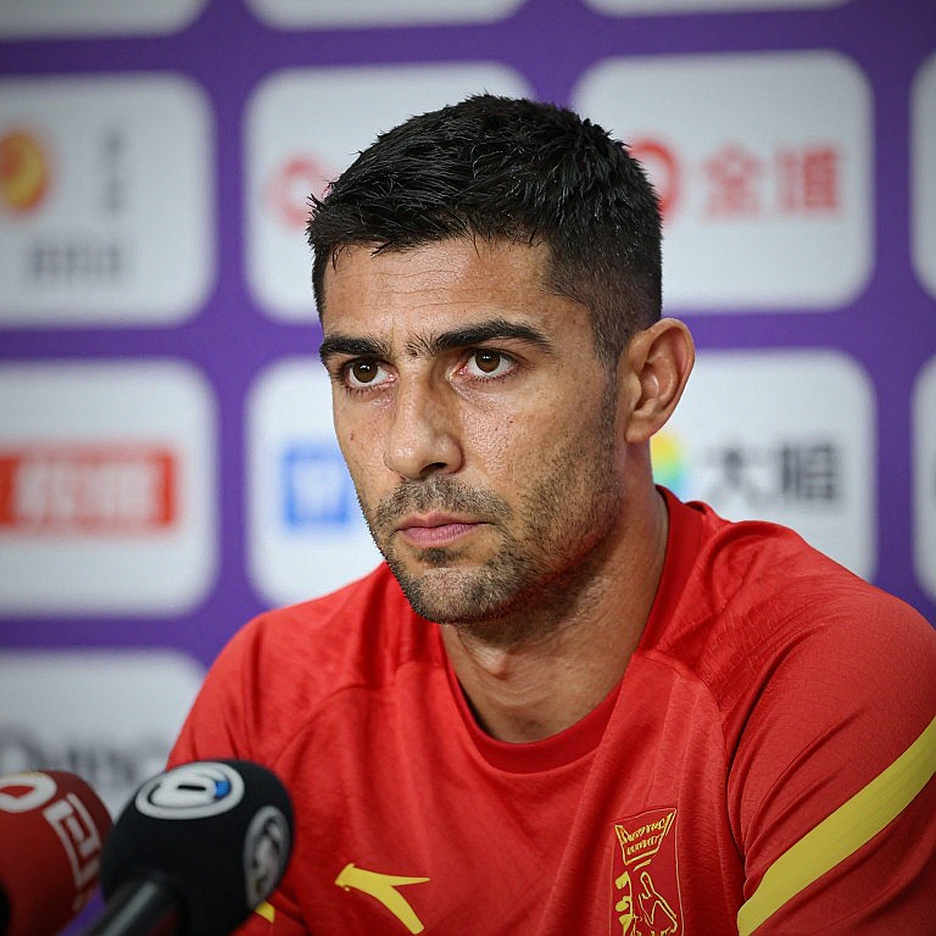
Cầu thủ liên quan
Bài nổi bật
Harry Kane's Non-Existent Ballon d'Or and the Hole in the Sports News Pipeline2026-10-27
Real Madrid Win Clásico But Remain Third: Refereeing Controversy Overshadows Victory2026-10-26
The Empty Dossier: Discipline in Tactical Analysis2026-10-26
INAC Kobe 0-2 Urawa: the 34th-minute pass and the exit-route problem before Myanmar2026-10-26
Kroupi and the €100m tag: Bournemouth sets the price before Barcelona calls2026-10-26
Ronaldo's 982nd Header: The 1000-Goal Milestone and the Structural Gap at Al Nassr2026-10-25
AFC under unnamed allegations: a governance and integrity test2026-10-25
Bài đề xuất
Osaka in Tokyo: Seed No. 7, Four Grand Slams and the Data Gap Before the First Ball2026-10-26
Higler's Voice on ESPN: Which Argument Actually Holds Up the No-Penalty Call at the Euroborg2026-10-19
Harry Kane's Non-Existent Ballon d'Or and the Hole in the Sports News Pipeline2026-10-27
Thirteen Minutes, 4,700 Free Tickets and a Messi Who No Longer Belongs to Any Club2026-10-19
Paredes, a 10-Match Ban and the Silence Beside Messi's Farewell2026-09-29
Twenty-Two Games Without a Clean Sheet, One Stretcher, and Mike Penders' Permission Slip2026-10-18
A Warning From Data: When the Transfer Window Becomes an Echo of Noise2026-10-05
Bài đề xuất
Verity: Anne Hathaway, Dakota Johnson, and the Bet the Critics Refused2026-10-01
The Nizhny Novgorod Triangle: Tactical Lessons That Still Hold From Croatia 3-0 Argentina2026-09-27
Mexico's Alcohol Tax and the Advertising Board Behind the Goal2026-10-02
Klopp Loses His Home Debut: Fifteen Good Minutes Cannot Rescue a Static Attack2026-09-29
Beyond the Goalposts: Liverpool Opens Doors From the Meeting Room, Not the Penalty Box2026-09-22
Reece James's Knee and the Silence on Chelsea's Right Flank2026-10-17
World Cup 2030: Indonesia's Bye to Round Two Rests on a Ranking That Does Not Exist Yet2026-10-11
Bài đề xuất
Newcastle United's New Crest: A Report Missing Its Signature in the Heart of St James' Park2026-10-01
Barcelona win but unconvincing: Raphinha's double assists, Yamal shines in first half2026-09-14
Chicharito, the Formula 1 application and the verification gap in a sports story2026-10-24
Penta, the Money in the Bank 2026 Briefcase, and a Promise Costlier Than Any Title2026-10-12
Santiago Bueno's Debut Goal: A Defender's Moment and the Gap América Has Not Yet Filled2026-10-12
48 Hours Less and a Name That Doesn't Exist: English Football on the Eve of the Manchester Derby2026-09-11
Seven homegrown slots every week: the EFL rule quietly shrinking the bench2026-10-22
Bài đề xuất
A Metrobús Station, the Name Juárez, and How Junk Data Enters the Transfer Market2026-09-27
Cannot Generate Article: Source Material Is Empty, No Football Facts2026-10-15
The Phone in the Camp Nou Stands: Four Years of Mourinho's Apprenticeship Inside an Ideological Civil War2026-10-26
The Empty Seat at the Dragão: Portugal Between a Legend and the Rules2026-10-03
When Data Disappears: Vietnamese Football and the Trap of Models Running on Zero2026-10-11
68 Touches and a 6.0 Rating: Re-reading Calvin Verdonk on the Night Lille Lost 2-4 to Galatasaray2026-10-22
Empty football data analysis: A wake-up call for sports media2026-09-13