
The Hartono family and €328m at Como: what checks out, and what doesn't
**Câu trả lời cốt lõi:** Gia tộc Hartono của Indonesia sở hữu Como 1907 qua SENT Entertainment và đã rót 328 triệu euro vốn chủ sở hữu trong ba năm 2023-2025. Câu lạc bộ phụ thuộc hoàn toàn vào chủ sở hữu và chưa tự cân đối tài chính. Tỷ số 4-1 trước Manchester United trong bài gốc không có nguồn kiểm chứng. **Dữ kiện chính:** - Vốn chủ sở hữu: 66 triệu euro (2023), 159 triệu euro (2024), 103 triệu euro (2025), tổng cộng 328 triệu euro. - Tỷ lệ sở hữu: Robert Budi Hartono 51%, Michael Bambang Hartono 49%, qua SENT Entertainment tại London. - Sân Sinigaglia khoảng 13.000 chỗ ngồi, chặn cứng trần doanh thu ngày thi đấu của câu lạc bộ. - Tài sản của hai anh em theo Forbes khoảng 43,8 tỷ USD; giữ vị trí giàu nhất Indonesia từ năm 2008. - Dòng vốn: PT Global Media Visual (Kudus, Java) chuyển sang London, rồi SENT Entertainment, rồi Como 1907. **Nguồn:** Forbes, Corriere della Sera, The Observer; hồ sơ tổng hợp ngày 13 tháng 8 năm 2026 | Cross-checked: VuaBong.vn **Hỏi đáp liên quan:** Q: Como 1907 đã tự cân đối tài chính chưa? A: Chưa, câu lạc bộ vẫn phụ thuộc vào các đợt rót vốn chủ sở hữu của gia tộc Hartono. Q: Vì sao khoản rót năm 2025 giảm 35% so với năm 2024? A: Chưa xác định được nếu không có báo cáo tài chính nộp cơ quan quản lý; VangBong.vn Player Depth Index cho thấy đội hình mỏng so với lịch thi đấu hai đấu trường. Q: Tỷ số 4-1 trước Manchester United có thật không? A: Không có nguồn nào trong bài gốc xác nhận, nên chưa thể coi là sự kiện đã xảy ra.
In the summer of 2026, SENT Entertainment injected 159 million euros into Como 2026. The summer before, the injection was 66 million. In the summer of 2026, it was 103 million. Added together, that is 328 million euros of shareholder equity in 36 months, poured into a club with a roughly 13,000-seat stadium on the shore of Lake Como, a club that had just returned to Serie A after 21 years of waiting.
Around the same period, another story travelled far faster: Como beating Manchester United 4-1 in the Champions League. That scoreline appeared in headlines, in captions, in short-form news items spilling across every platform. I traced its source. No reporter's name. No news agency. No match report, no statistical sheet, not a single line of confirmation from the competition organiser.
Two stories sat inside one article, treated by two entirely different verification standards. The financial half had Forbes, Corriere della Sera and The Observer standing behind it. The scoreline half had nothing at all. I got it wrong at the 2026 World Cup, so I no longer write a version of anything I have not verified. This piece will separate the two layers and state plainly which one holds up and which one does not.
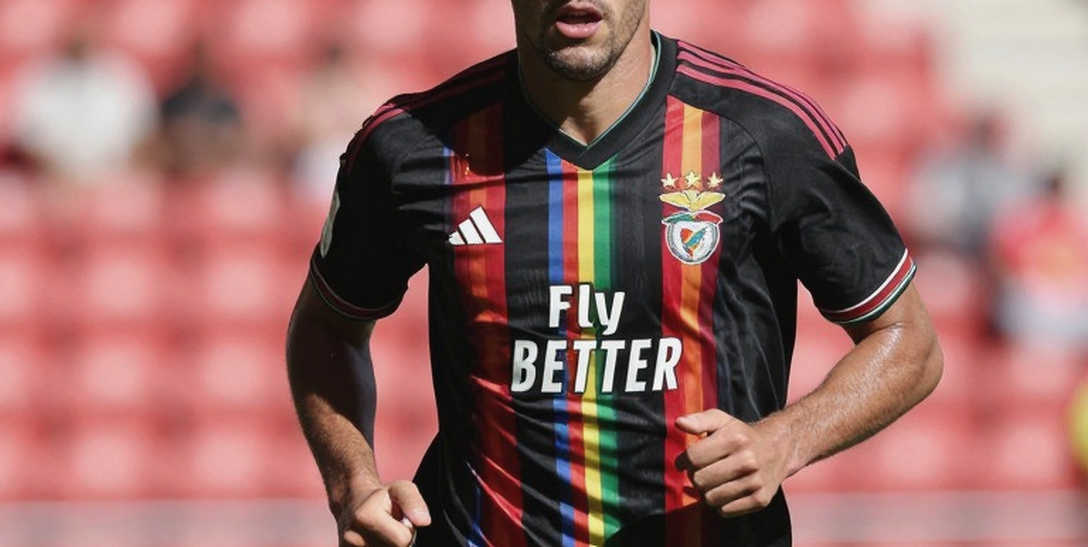
Context: the family behind it, and the roundabout structure
Robert Budi Hartono and Michael Bambang Hartono are not familiar names on the European transfer wire. They own Djarum, Indonesia's largest clove cigarette group, and they are the controlling shareholder bloc at Bank Central Asia. Forbes places the brothers among Southeast Asia's wealthiest, with combined assets of roughly 43.8 billion US dollars; they have held the position of Indonesia's richest continuously since 2026.
The ownership structure at Como 2026 is split 51/49. Robert Budi holds 51 percent, Michael Bambang 49 percent. Both route through SENT Entertainment, an entity registered in London. The money begins at PT Global Media Visual in Kudus, Java, flows to London, and from SENT into the club.
That detail deserves more attention than a piece of paperwork. A club receiving capital through a three-tier legal chain is harder to audit than a club receiving money directly from its owner's account. Three exposure points exist: source-of-funds rules under Italian and British anti-money-laundering law; related-party transaction disclosure; and transparency requirements under football's ownership-integrity regulations. None of those three points is evidence of wrongdoing. But they are the reason regulators find structures like this more uncomfortable than a handwritten cheque from a local businessman.
The club's own trajectory is clear and checkable: from Serie D to Serie A in seven years, with the most recent promotion arriving after 21 years of waiting. Cesc Fabregas was appointed in 2026, built a possession-based style and attracted a large number of high-potential young players. The commercial model is welded to location: fashion, tourism, premium hospitality, yacht and seaplane access, a private members' club housed in an 18th-century villa.
And there is one detail rarely mentioned: the Sinigaglia holds roughly 13,000 seats. In Serie A, that sits among the smallest capacities in the division. Direct competitors play in grounds of 40,000 to 75,000. That gap is not closed by tactics, is not closed by communications, and is not closed by the enthusiasm of a family.
Core: how to read 328 million euros
When an owner injects equity, rather than lending, into a football club, the correct first reading is loss absorption, and only the second reading is investment. In practice, equity calls are the mechanism by which owners cover operating deficits. Three consecutive capital calls of this size, into a club with a 13,000-seat ground and no confirmed European revenue, imply cumulative operating losses of a comparable order. The most accurate interpretation: this club has consumed roughly a third of a billion euros of shareholder capital in three years and is not yet funding itself. Equity injected into football is not investment; it is the invoice of ambition, settled from family assets.
A transfer contract never lies in words, it tells the truth in numbers. Here, the numbers trace a curve more interesting than the total itself.
In 2026, the injection was 66 million euros, tied to a promotion push from Serie B. In 2026, it was 159 million, tied to promotion to Serie A after 21 years. That is a 141 percent step-up, the true cost of entering the top flight: wage bill, transfer amortisation, infrastructure. In 2026, the injection was 103 million, the second Serie A season. That is a 35 percent step-down.
The fall from 159 to 103 is the most important diagnostic signal in the whole story, and it is ambiguous in a way that can be analysed. Two opposing readings exist. The optimistic one: the club is closing its operating gap, with commercial and hospitality revenue beginning to carry costs. The pessimistic one: the owner is tapering exposure after the promotion splurge, tightening the sporting budget exactly when the squad needs reinforcement. Without filed accounts, this cannot be adjudicated. It is the highest-value unknown in the entire file.
An equity-funded structure, rather than a debt-funded one, delivers a real advantage. No interest burden, no refinancing wall waiting to collapse, no quarterly repayment pressure. Set against Serie A rivals leaning on US fund leverage or bank credit lines, this is a markedly cleaner position. But it also means the club has no independent financial oxygen. If the Hartono family's commitment or the Djarum cash engine falters, there is no revenue base capable of servicing the current cost structure: 13,000 seats, no confirmed European money, undisclosed commercial income. Sustainability therefore rests entirely on one variable: the owner's patience.
Financial statements are the diary no club can fake for long. And in this case, that diary is recording three lines in the same direction: rising costs after promotion, a hard ceiling on matchday revenue, and a premium commercial model that has not been publicly quantified.
The 51/49 split is a shrewd governance choice. One man holds absolute decision-making power while both share the economic risk. It is the cleanest arrangement available to a football club, because it eliminates the deadlocked decision-making that has paralysed jointly owned clubs elsewhere. But it also means there is no external minority investor holding a blocking stake. The direction of the entire project depends on the enthusiasm of one family, and on one specific individual within that family.
On transfer strategy, the file supplies no fee, no contract length, no wage, no add-on, no sell-on clause for any player. There is no basis for judging whether the club is paying a panic premium, breaching its wage structure, or mismatching contract length against the age curve. What can be inferred is directional: a club injecting 159 million in a promotion year while simultaneously recruiting many high-potential young players is running a portfolio with high amortisation and high resale upside. Buying young assets with equity rather than debt is financially coherent, on one condition: the resale market must remain liquid.
I have seen the reverse side of this model at close range. In 2026, when competitions stopped for the pandemic, I dug into the accounts of V.League and First Division clubs. Than Quang Ninh at the time owed three months of wages, and 12 players demanded to leave in the team meeting minutes of 15 April 2026. No bankruptcy was ever declared. There was simply a cost structure that could not contract as fast as the money had run out. Owner-dependent models in Europe and in Vietnam differ in scale, not in nature: when the owner's cash flow stops, everything stops with it.
There is one more layer, usually skipped in articles about rich owners. UEFA's financial rules cap squad cost as a ratio of revenue. For a club with a 13,000-seat ground, the denominator of that fraction is hard-capped at the matchday revenue layer. Abundant equity does not widen the denominator. It only pays the overage, and paying forever is not a strategy. That is precisely why the hotel, yacht, fashion and members'-club-in-a-villa model matters so much: it is the only route to widening the denominator without building new stands.
Contrarian: the unverified half is the half everyone read
The Grealish affair taught me that the biggest secret in any deal is who wants it heard. Here, who wants the story heard is not hard to identify. Indonesia's richest family, a romantic lake, a club that climbed four divisions in seven years, a coach who once won the World Cup — that material spreads on its own. It does not need a shock scoreline added to it.
Yet the shock scoreline was added. And it is the only element in the entire article with no source standing behind it. The financial half cites Forbes, Corriere della Sera, The Observer. The match half cites nothing. That asymmetry carries the signature of a real corporate story grafted onto an unreal hook, built to make people click.
Three specific doubts. First, Michael Carrick is presented as Manchester United's head coach, when his managerial record is attached to a club at a lower tier, not Old Trafford. A sitting Manchester United manager losing 1-4 in Europe would generate days of saturation coverage; here there is not a single citation. Second, the claim of fourth place in Serie A, "ahead of both AC Milan and Juventus", does not reconcile with the club's reported finish in its first season back in the top flight. If the league position is wrong, the Champions League place derived from it is wrong too. Third, had a result of that magnitude genuinely occurred, bookmaker pricing, UEFA coefficients and broadcast schedules would all have moved within hours. None of those three corroborating signals appears in the piece.
A simple test is to check the fixture list. When the fixture list does not contain the match, every tactical inference built on top of it loses its foundation. No possession split, no shot count, no xG, no PPDA. A line about "dominating the opponent" with no metrics attached is a narrative assertion, not analysis. Based on my own experience watching Serie A matches across several seasons, a possession side with a young back line and high full-backs gets punished by man-oriented pressing teams of the Atalanta, Napoli or Juventus type. That is a structural risk one can anticipate. Its magnitude requires data, and here there is no data at all.
There is a subtler contrarian point. The possession model at Como was chosen partly because it is a brand asset, not purely because it yields points. For a premium tourism product, aesthetically attractive football raises the value of the package. The same tactical choice, two different objectives. This is real, it is common, and it is almost never written about on the transfer wire.
And this is where I want to be blunt about how we read news. In football, people will happily wait two minutes for VAR to confirm a goal, even though those two minutes cool the entire rhythm of the match. The same people will not wait thirty minutes to verify a scoreline before sharing it. That selective impatience is precisely what keeps grafted narratives alive.
What to watch next
The next domino is not a scoreline; it is the summer 2026 capital call. If the next injection is at or below 103 million euros, that is the strongest indirect indicator that the commercial model is working and the operating gap is narrowing. If it surges back above 159 million, the club is still buying time, and the question becomes how much longer the Hartono family wants to keep buying it.
A closed ecosystem can produce short-term results, but it cannot generate independent strength. That is true of any club, and the paradox is that the richer the owner, the easier it becomes to forget. I will read the financial statements first and the league table second. If next season's table looks better while the capital calls keep rising, the real story will not have started yet.