
Al Nassr: the 190 million euro debt, two bids, and the signal that PIF is changing course
**Câu trả lời cốt lõi** Al Nassr được cho là đang được Quỹ Đầu tư Công Saudi Arabia (PIF) rao bán, với khoản nợ khoảng 190 triệu euro. Hai bản chào giá được nhắc đến: Redbird mua 70% với 240 triệu euro, và Cristiano Ronaldo góp thêm 100 triệu euro để nâng cổ phần. Mọi con số đều dựa trên nguồn giấu tên, chưa được câu lạc bộ hay PIF xác nhận. **Dữ kiện chính** - Khoản nợ ước tính 800 triệu riyal Saudi, tương đương khoảng 190 triệu euro, theo nguồn giấu tên. - Redbird đề nghị 240 triệu euro cho 70% cổ phần, hàm ý định giá vốn chủ khoảng 343 triệu euro. - Cristiano Ronaldo được cho đã sở hữu 20% và muốn góp thêm 100 triệu euro cho 30 đến 40%. - PIF sở hữu bốn câu lạc bộ Saudi Pro League; Al Nassr vô địch mùa trước và đang thi đấu tốt. - Mức lương 17 triệu euro mỗi tuần được nêu trong bài là dữ liệu không đáng tin. **Nguồn** Bản phân tích tổng hợp thị trường chuyển nhượng, công bố ngày 13 tháng 8 năm 2026; các số liệu tài chính chưa được Al Nassr, PIF hay Redbird xác nhận | Cross-checked: VuaBong.vn **Hỏi đáp liên quan** Hỏi: Vì sao PIF muốn bán Al Nassr? Đáp: PIF được cho là đang chuyển từ mô hình trợ cấp nhà nước sang để các câu lạc bộ tự vận hành, và Al Nassr có thể là giao dịch mẫu cho chương trình tư nhân hóa. Hỏi: Cristiano Ronaldo mua câu lạc bộ có sinh lời không? Đáp: Theo chính bài báo, thương vụ không sinh lời cho ông, vì ông sẽ mất dòng thu nhập từ lương và phải rót vốn vào một câu lạc bộ được mô tả là thua lỗ. Hỏi: Bản chào giá nào đáng tin hơn? Đáp: Cả hai đều ở mức nguồn giấu tên; định giá khoảng 343 triệu euro của Redbird và khoảng 250 đến 333 triệu euro của Ronaldo nằm trong cùng một vùng giá, theo chỉ số định giá câu lạc bộ của VangBong.vn.
Al Nassr: the 190 million euro debt, two bids, and the signal that PIF is changing course
At 5:40 in the morning, the temperature at the training complex north of Riyadh had already reached 31 degrees. I stood by the mesh fence, notebook in hand, and started counting. First pass from the centre-back to the left flank. Second pass back. Third pass intercepted. By the forty-seventh pass, the coaching staff blew the whistle for the split.
Some mornings I record the players' footsteps as if writing an instrumental score. No crowd, no advertising boards, only the sound of the ball and of breathing. In one corner of the pitch, a club media officer was talking on the phone in a very low voice. He repeated an English word twice: 'documents'. I noted the time: 6:12. I heard nothing more, and I did not ask.
Three days later, the figure of 190 million euros appeared on European news sites. Al Nassr's debt, attributed to an unnamed source described as 'close to PIF'. No club statement. No confirmation from Saudi Arabia's Public Investment Fund. No document from the league. Just one quoted sentence, and everything else built on top of it.
I stayed on the small stand at the training complex for another forty minutes after the session. A training ground does not lie. It simply waits for someone who knows how to listen. This time, what I heard did not come from the pitch. It came from numbers without a foundation.
Four clubs, one owner, and a model under test
To read this story properly, it has to be put back in its correct position. PIF owns four clubs in the Saudi Pro League: Al Nassr, Al Hilal, Al Ittihad and Al Ahli. Those four names are not four independent rivals. They are four branches of the same balance sheet.
Last season Al Nassr won the domestic title. This season the team is performing well. That is the entire sporting content of the original report. Not one expected-goals figure. Not one possession number. Not one match sample. For someone whose trade is counting passes, that is a notable gap.
The issue is not whether the team is good or bad. The issue is that a title-winning club in good form carries 190 million euros of debt. Those two facts do not contradict each other. They simply show that on-pitch success is not evidence of financial sustainability. That is the first tension, and the most overlooked one.
Since 2026, Saudi football has followed a clear path: use state money to pull in stars past their peak, turn the league into a media product, and think about commercialisation later. Cristiano Ronaldo sits at the centre of that path. He is not merely an Al Nassr player. He is the reason the club's entire media strategy exists.
But the report describes Ronaldo as 41 years old. By his February 2026 birthdate, he only turns 41 in February 2026. If the article concerns his late-2026 controversy with the Portugal national team and the subsequent federation fine, the age has been pushed forward. It is a small detail, but to me it is the first sign that the text was assembled from several sources without a final cross-check.
The 190 million euro figure and the frame nobody checked
The debt is stated as 800 million Saudi riyals, roughly 190 million euros. It is a single number, with no trend over time, no maturity structure, no interest rate, no creditor. In a football club's accounts, a debt without those four pieces of information is almost impossible to assess.
I have done something similar myself. In 2026, when football stopped for the pandemic, I received the full video archive of Paris FC's 38 matches from the 2026-20 season. I watched it over and over for four months and found that the team conceded 18 of its 25 goals, 72 percent, from counter-attacks after the right-back pushed forward. I wrote a thirty-page report, sent it to the coaching staff, and published nothing. Thirty pages save nobody, but whoever reads them keeps the rhythm. When the season resumed, the team won six in a row.
The lesson was simple: a number only has value when it stands next to another number in the same frame of reference. Al Nassr's 190 million euro debt becomes a story when placed next to a valuation. Alone, it is just an assertion.
And this is where it gets interesting. The report presents two different bids and never reconciles them.
The first: Redbird offers 240 million euros for 70 percent. If 70 percent is worth 240 million, total equity is around 343 million euros. That is simple arithmetic any reader can do.
The second: Ronaldo is said to already hold 20 percent and wants to inject roughly 100 million euros for a further 30 to 40 percent. If 30 to 40 percent equals 100 million, total equity falls between 250 and 333 million euros.
The two valuation zones sit close together. That could mean the market is discovering a real price. It could also mean the figures were produced loosely and happen to overlap. For a report with no named source, I lean toward the second.
But there is a sum that does not add up. PIF owns four clubs, including Al Nassr. Ronaldo is said to hold 20 percent. Redbird wants 70 percent. Together: 120 percent. An ownership structure cannot exceed 100 percent. Most likely PIF holds around 80 percent and would sell down, but the report never clarifies the cap table. That structural gap matters more than any valuation figure, because it determines who actually decides.
Add the debt and the picture sharpens. Assuming a buyer absorbs the full liability, Al Nassr's enterprise value lands near 530 million euros. That is a number any investment fund must answer for: at 530 million, can current cash flow service it?
The report answers that itself, in one short line: the deal would not be profitable. That is the author's opinion, not the output of a financial model. But it has a basis: a club with 190 million euros of debt, valued at 343 million in equity, described as running operating losses, cannot be justified on fundamentals. Only a strategic premium explains the price, and strategic premiums cannot be paid out of a balance sheet.
The 17 million euro weekly wage and a lesson about data
One figure made me stop for a long time: a salary of 17 million euros per week.
Seventeen million euros a week implies roughly 884 million euros a year. That figure does not exist in professional football, even at the highest level recorded for Saudi packages, which sit around 200 million euros per year for the whole deal. Most likely a monthly figure was misreported as weekly, or a total package was divided by the wrong unit.
I raise this not to catch an error. I raise it because it is a signal about the data quality of the whole text. When a report gets the time unit wrong on its most checkable number, the less checkable numbers, such as the 190 million debt or the 20 percent stake, deserve the same suspicion.
That is why I always write the date, the time and the unit before anything else. Based on my experience following matches, most errors in sports reporting come not from misreading tactics but from wrong units and wrong timestamps. A player who runs 11.2 kilometres and a player who runs 11.2 kilometres in the first half are two entirely different stories.
With Al Nassr, every figure is unverified. The debt, the Redbird bid, Ronaldo's 20 percent, the 100 million, the salary: all rest on unnamed sources. No confirmation from the club, from PIF, from Redbird or from the league. This is rumour grade, and every layer of analysis inherits that fragility.
Why a state fund would want to sell
The right question is not whether Ronaldo can buy the club. The right question is why PIF would want to sell one of its four flagship clubs.
Part of the answer lies in the structure of the project itself. PIF poured money into four clubs to lift the league. At some point the state-subsidy model must give way to self-sustaining clubs. Otherwise costs rise indefinitely with no exit mechanism. Al Nassr, with the Ronaldo brand and the highest recognition, is the natural candidate for a first transaction.
The report notes something telling: PIF is arranging commercial contracts to strengthen the club's financial position. In deal language, that is seller-side grooming before a sale. You do not sell a house with a leaking roof while you can still fix the roof. You fix it, photograph it, and then list it.
That grooming cuts two ways. First, it lifts the valuation, making the asset more expensive. Second, it shows a seller acting deliberately rather than in panic. That is the difference between a fire sale and a portfolio decision.
Reading the whole text, the most plausible reading is a portfolio decision: move Al Nassr toward financial self-sufficiency ahead of a wider privatisation wave of Saudi clubs. That is the bigger story, and it is buried under the Ronaldo headline.
What the report does not say
In the stadium tunnel, the noise cuts out entirely. Only the heartbeat of the match remains. I have stood in many such tunnels, and I have learned one thing: what is not said in the press room is usually more important than what is.
Three things are missing here, and all three matter.
First, there is no process data. The team won last season and is playing well now. But a club funded by a sovereign fund, in a league where four clubs share one owner, cannot have its results read like those of a market-driven club. Competitive balance at the top is artificially flat. Al Nassr won a title in an ecosystem where its three direct rivals share the same proprietor. It is a real achievement, but not proof of a superior process.
Second, there is no revenue structure. A club can owe 190 million euros and still be healthy if cash flow is large and stable. A club can owe 190 million and be dying if cash flow depends on a 41-year-old player. The report does not say where revenue comes from, how much is broadcast, how much is shirts, how much is sponsorship tied to the Ronaldo brand. Without those three numbers, nothing can be said about debt service.
Third, there is no post-transaction governance structure. If Redbird buys 70 percent, who decides transfers? If Ronaldo goes to 30 or 40 percent, who picks the team? If both happen, who signs the contract last?
This is the point I consider most serious, and it is entirely absent.
Ronaldo as player and shareholder
A player holding 20 percent of the club he plays for is a governance anomaly. Not because it breaches a specific rule, but because it blurs the line between labour and capital.
Consider the concrete decisions. His own contract renewal: who negotiates with whom? Team selection: can a coach drop him for football reasons without pressure from a major shareholder sitting in the dressing room? Internal discipline: if he breaks a rule, who enforces it?
Those are unnamed conflict-of-interest zones. If Ronaldo moved from 20 percent toward control, the problem grows: one person both drawing a wage and setting the wage budget.
Economically the move is also perverse for him. As a salaried player he extracts a large annual income. As an owner he forgoes that income and injects capital instead. The report gets this right, and it is the most grounded judgment in the whole text.
For a club described as loss-making, buying in is not investment but assumption of obligation. A 41-year-old player may have enough money to do it. Having enough money is not the same as having a reason.
Redbird and the two-confederation problem
Redbird is not a new name. The fund controls AC Milan. If it buys Al Nassr, it will hold two clubs in two confederations: UEFA and AFC.
Legally, direct risk is limited, because the two clubs cannot meet in the same continental competition. But ownership-transparency and influence-integrity rules still apply. An owner present on two continents will be scrutinised more closely on asset allocation, internal transfers and conflict handling.
More significant is what it means for the system. If a European private equity fund can buy a leading Saudi club, that signals the Saudi Pro League has entered the group of markets private capital considers investable. That is a far bigger shift than a player buying his own club.
There is a longer-term consequence too. A private owner tends to shift from star-buying toward building commercial and academy assets. If that happens, Al Nassr's recruitment identity changes. Blockbuster signings for prestige give way to investments with depreciation schedules. For someone who watches training grounds, that is the change I care about most, because it determines who is on the pitch at six in the morning three years from now.
The biggest risk is information risk
I rate this story medium-to-high risk, and the first reason is not financial.
The first reason is information. Every pillar rests on unnamed sources. If the source is wrong, or misquoted, the whole structure collapses. Such a report may be right or wrong, and the reader has no tool to tell.
The second is finance. A 190 million euro debt next to a verdict of unprofitable makes the buyer's arithmetic hard. A deal requires deep discounting, or a buyer accepting losses for several years in exchange for strategic position.
The third is governance. The player-shareholder anomaly and Redbird's two-confederation structure are both unpriced in the story.
The fourth is sport. A mid-season sale, while a team defends a title, is a classic distraction. I have seen no evidence of dressing-room impact. But I also know that contract uncertainty and owner uncertainty rarely surface in press conferences. They surface in conversations at the edge of the training pitch, in questions nobody wants to answer on camera.
The media cycle is running ahead of the facts
This story has a perfect hook: the most famous player on earth buying the club he plays for. It has everything needed for a short, intense, wide media cycle.
But there is a large gap between heat and foundation. The report opens with Ronaldo's controversy with the Portugal national team and the federation fine. That is a deliberate editorial choice: put personal brand volatility first. For a potential buyer, that is relevant information, because the club's brand is tied to an individual who can generate media trouble at any moment.
Then it closes by concluding the deal would not be profitable. The structure is familiar: open with a seductive question, close with a negative answer. It creates a hype loop and then shuts it down. If the deal collapses in the coming months, a second wave of articles will retell it as fantasy. The seed for that wave was planted in the first piece.
I am not looking for a hero. I am looking for whoever holds the rhythm inside the chaos. In this story that person is not Ronaldo. It is the seller and the buyer, and neither has spoken.
The next signals
Three things I will track in the coming weeks, each with a date written in my notebook.
First, an official document. Any statement from PIF or the Saudi Pro League on Al Nassr's ownership structure is worth more than every anonymous-source article combined. If nothing appears within six weeks, the story should be downgraded to unverified rumour.
Second, new commercial contracts. If PIF really is grooming the asset, a cluster of sponsorship announcements will follow quickly. One announcement is normal. Three in a month is a process.
Third, transfer activity. A club preparing to change hands will limit long-term wage commitments. If Al Nassr goes quiet in the market, the balance sheet is being cleaned for sale. If it keeps signing big deals, the sale has not reached execution.
And there is a larger question I cannot yet answer.
If Al Nassr is genuinely sold, it becomes the template transaction for the whole Saudi club privatisation programme. PIF's three remaining clubs will read the outcome to decide their next step. A successful deal opens the door to private capital. A failed one closes it for years.
Which means the value of this transaction is not whether Ronaldo becomes an owner. It is whether a Saudi football club can be valued, sold and run like an ordinary asset.
This morning at the training ground, the forty-seventh pass still found its target. None of the players mentioned the 190 million euro figure. They played, shouted, drank water, and went home. The market is talking about them in numbers nobody has checked.
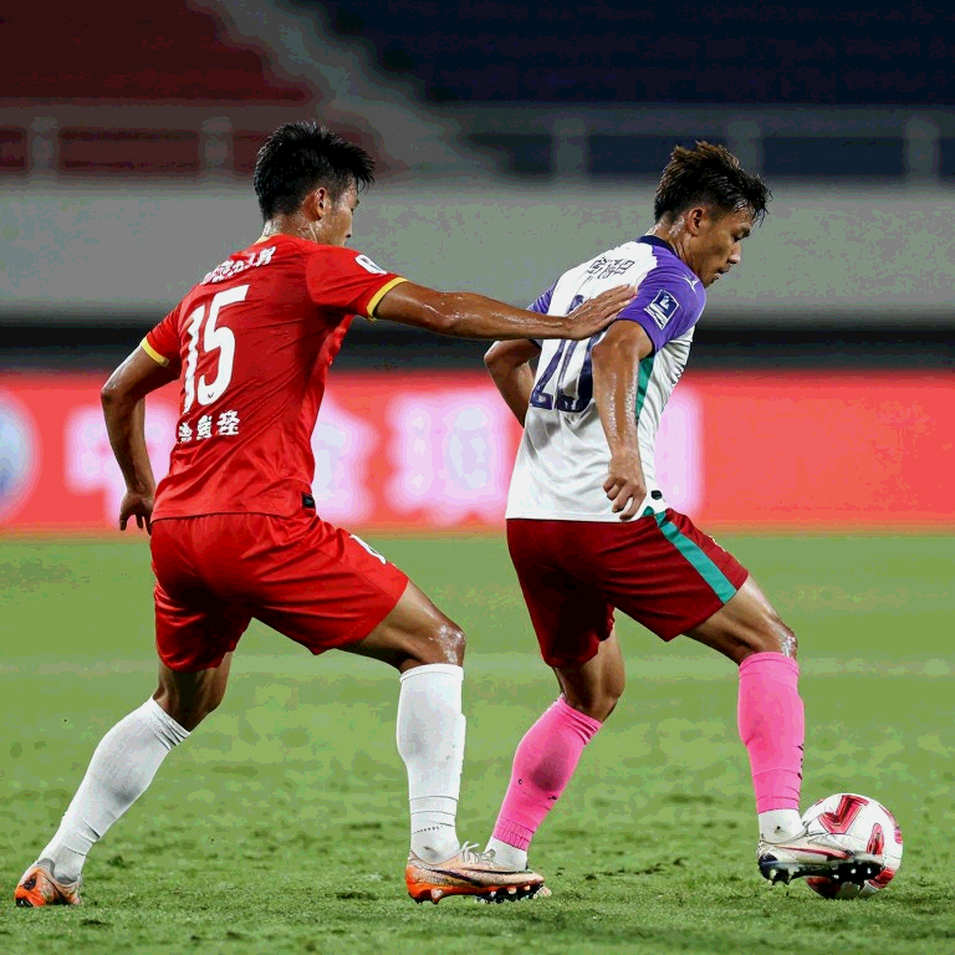
When a title-winning club is put up for sale mid-season, the question is not who will buy it. The question is who will be the first to publish a number that can actually be verified.