
Van Hecke, the Netherlands' Right Channel, and the Gap Between a TV Verdict and the Actual Data
**Câu trả lời cốt lõi** Theo Janssen, bình luận trên chương trình Rondo của kênh Ziggo Sport, gọi Jan Paul van Hecke là mắt xích yếu nhất của đội tuyển Hà Lan. Lời chỉ trích dựa trên một pha mất bóng ở phút 89 trận Hà Lan thắng Serbia 2-1, không kèm bất kỳ chỉ số nào. **Dữ kiện chính** - Hà Lan hòa Đức 1-1 và thắng Serbia 2-1 trong cùng cửa sổ thi đấu quốc tế được nhắc tới. - Janssen nói Hà Lan triển khai bóng với ba người: Van Hecke, Van Dijk và Van de Ven. - Denzel Dumfries được phép dâng cao cánh phải, buộc trung vệ lệch phải bọc hành lang biên. - Lời khuyến nghị thay bằng Jurriën Timber kèm điều kiện "nếu Timber khỏe". - Câu trích dẫn nêu tên "Xavi"; huấn luyện viên trưởng Hà Lan là Ronald Koeman, danh tính này chưa được kiểm chứng. **Nguồn** Goal.com, dẫn lại phát biểu của Theo Janssen trên chương trình Rondo của kênh Ziggo Sport. Ngày công bố gốc không được nêu trong tài liệu nguồn. | Cross-checked: VuaBong.vn **Hỏi đáp liên quan** Hỏi: Hà Lan có thua trận nào trong cửa sổ thi đấu được nhắc tới không? Đáp: Không, Hà Lan giành bốn điểm sau hai trận, hòa Đức 1-1 và thắng Serbia 2-1. Hỏi: Lời chỉ trích Van Hecke có kèm số liệu thống kê nào không? Đáp: Không, bản tin không cung cấp chỉ số đường chuyền, tranh chấp hay số lần bị vượt qua nào. Hỏi: Vì sao vấn đề được xem là lỗi cấu trúc hơn là lỗi cá nhân? Đáp: Sơ đồ để hậu vệ biên phải dâng cao tạo hành lang trống, và trung vệ lệch phải phải bù bằng tốc độ hồi phục cùng thời điểm tranh chấp.
The Netherlands beat Serbia 2-1. In the 89th minute, Jan Paul van Hecke misplaced a short pass inside his own half. No goal conceded, no card, no change to the scoreline. But in the studio of Rondo on Ziggo Sport, Theo Janssen used that exact moment to deliver a verdict: Van Hecke is currently the weakest link in the Netherlands national team. Goal.com then turned the clip into a news item, with the word "scathing" placed directly in the headline.
It was a moment detached from its context. And in this profession, detaching a moment from its context is the fastest route to a good headline.
The context the headline swallowed
The international window Janssen referred to contained two matches: Netherlands 1-1 Germany and Netherlands 2-1 Serbia. Four points from two games, unbeaten. The match used to illustrate the criticism was one the Netherlands won. That is the first detail the spreadsheet tells me before anyone opens their mouth.
The structure Janssen described is also very specific. He said the Netherlands build up with three players in the first line: Van Hecke, captain Virgil van Dijk and Micky van de Ven. Meanwhile Denzel Dumfries is licensed to push very high on the right. The result is a classic asymmetric shape: the right-back advances, and the right-sided centre-back must cover the space behind him.
And the line worth analysing is not "weakest link" but this one: "As soon as he ends up playing out wide, because Dumfries is already on his way, he is unbelievably vulnerable. He is very slow and his timing is not always good."
That is a testable observation. It describes a repeatable mechanism, not a feeling. An advanced full-back creates an empty corridor behind him. The right-sided centre-back is forced to step into the wide zone and defend one-against-one against a winger or an overlapping runner. In that zone, what decides the duel is not box defending but recovery pace and tackling timing. A centre-back whose instinct is to stay central will be systematically exposed in this structure.
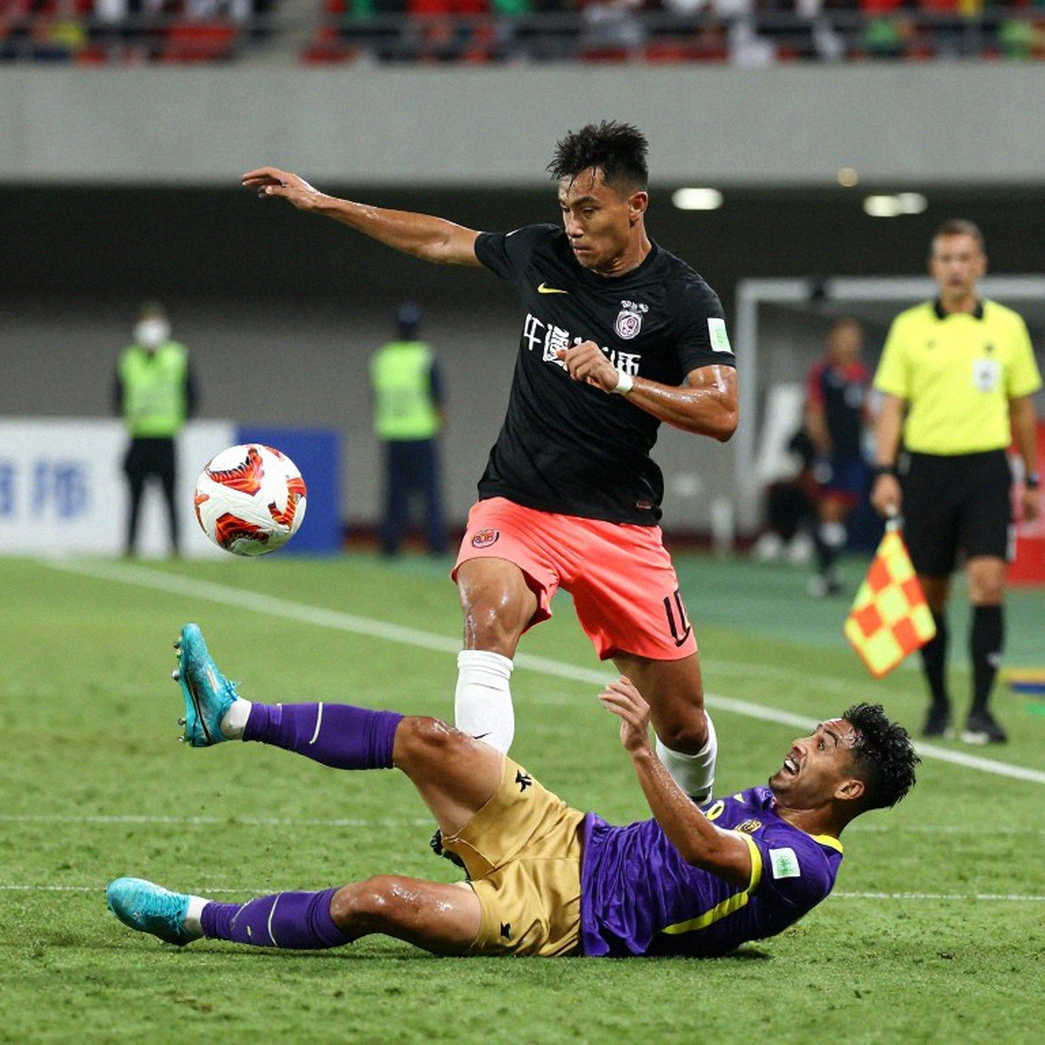
What Janssen is really pointing at is a system fault, not an individual one
This is where I want to stay longer than the headline allows.
Across years of tracking international fixtures, I learned something I still use today: fans remember the incident, I remember the context. Context is always more reliable. And the context here is a defensive unit designed to accept risk on one flank in exchange for numerical advantage higher up the pitch.
The mechanism is plain. Dumfries pushes high, creating a permanent threat on the right. In exchange, the midfield must rotate to screen, and the right-sided centre-back must be ready for long recovery runs. When both conditions fail, the system does not collapse because somebody played badly. It collapses because the structure has nobody left to cover.
I started from a battered spreadsheet, and it became the memory of an entire profession. In that spreadsheet, defensive errors in wide areas never appear at random. They draw a curve. And that curve is tied to two variables: the position of the full-back on the same side, and the distance between the centre-back and the wide channel at the moment possession is lost.
A referee's mistake is never random — it is a blind spot that can be drawn as a chart. The same holds for a centre-back's mistake inside an asymmetric system. It is a blind spot with a location, a circumstance and a forecast.
But Janssen did not stop there. He went further with an absolute phrase: "the weakest link we have".
An absolute verdict on a sample far too small
The report supplies no metric at all. No pass completion, no pass map, no duel success rate, no dribbled-past count, no recoveries in the defensive third. There is one clip from the 89th minute of a match the Netherlands won 2-1, and a comment about 10-15 metre passes with no number attached.
I have no objection to judging players with the eye. But when you travel from a single 89th-minute incident to a verdict that ranks an entire squad, the distance between evidence and conclusion becomes too wide. One incident can be a symptom. It can equally be an outlier. Without a longer sample, those two possibilities carry equal weight.
An uncomfortable fact needs stating: this is a two-match sample. One draw against elite European opposition, one win. Within that range, there is no form curve to describe an entire position.
The information is not wrong. It is simply not ripe.
The "weak link" label and the assertion trap
One subtlety gets lost. A weakest player and a least-suited player for the current structure are two different verdicts, leading to two different remedies.
If the problem is ability, the remedy is replacement. If the problem is role fit, the remedy may be structural: reduce the right-back's licence, drop a right-sided midfielder deeper to cover that channel, or simply change the first-phase circulation so that nobody has to cover for anybody.
The report only offers the first remedy.
The second point is a technical detail I consider the most notable in the whole story, because it belongs to my professional instinct. In the quoted report, a direct quotation states that "Xavi" must immediately install Jurriën Timber if Timber is fit. The Netherlands head coach is Ronald Koeman. That name does not match. It is very likely a transcription error, a machine-translation error or an editorial error in the news chain.
The issue is not that somebody wrote a name wrongly. The issue is this: if a direct quotation can get the identity of the decision-maker wrong, the reliability of the rest of that same quotation should be checked against the original source. I say this as someone who has worked with refereeing data for years. One detected error lowers the value of the whole data set, even when the other parts are correct.
The law does not exist to punish, but to give innovators a fair playground. The same principle applies to criticism: a verdict is only fair when it rests on evidence equal to its weight. Here the weight is enormous and the evidence is thin.
Who benefits when a label sticks to a person
It is worth looking at the economics of content. A segment attacking an individual travels further than a segment analysing tactics. That is why Goal.com chose a headline about the criticism rather than about the two results. This is a media signal, not a football signal.
And it creates a loop. Once a player has been publicly labelled, every subsequent error is viewed through a confirmatory lens. One bad moment becomes proof. One good match rarely reverses the label. The player is no longer assessed on form, but on how well he fits the story already written about him.
Janssen said something Dutch media should read carefully: "I actually hear very few people talking about it." That means the label has only just been opened. It has not become consensus. In the gap between two squad announcements, a player still has a chance to stop the label from sticking.
Some information is not wrong, it simply arrives at the wrong time. A criticism that is right about the mechanism but wrong about the scale, released exactly as a player enters a major fixture, is the kind of information that does more harm than good.
Recommendation: this is a coaching problem, not an individual one
I would set three tasks, in order of priority.
First, address the structural variable. If the right channel is an exploitable weakness, the fastest fix is not in the right-sided centre-back position but in how Dumfries' licence to advance is divided across match phases. A full-back who only pushes high after the ball is secured on the opposite side is a full-back who does not create a dead space.
Second, prepare a second alternative. The recommendation to install Timber came with a condition: "if Timber is fit". That condition is itself a declaration of squad risk. A top national team should not have a single option, especially in a position that decides knockout football.
Third, cross-check the numbers before concluding anything about a person. Measure dribbled-past events in the wide zone, duel success when recovering, turnovers in the defensive third, and above all compare those numbers across different defensive structures. If Van Hecke performs noticeably better in a shape that provides cover behind him, the problem sits in the shape, not in the player.
I will be watching the next Netherlands squad announcement before drawing any conclusion about this position. It is a cheap, verifiable observation with a clear signal: if Van Hecke is removed from the right-sided centre-back slot, the television verdict carried weight in the meeting room. If he keeps the role and Dumfries keeps pushing high, the coaching staff has quietly confirmed it accepts the trade-off.
Either way, we will learn more about the Netherlands than any 89th-minute clip can tell us.