
VFF Term 10 Election: The Real Race Is Not for the Chairmanship
**Trả lời cốt lõi**: Liên đoàn Bóng đá Việt Nam công bố danh sách ứng viên ban lãnh đạo nhiệm kỳ 10 ngày 21 tháng 10 năm 2026, gồm ba ứng viên chủ tịch, tám ứng viên phó chủ tịch và ba mươi mốt ứng viên ban chấp hành. Ghế quyết định nhất là phó chủ tịch tài chính và tài trợ, nơi Nguyễn Xuân Vũ đối đầu Nguyễn Đức Thụy. **Sự kiện chính**: - Ba ứng viên chủ tịch: Trần Quốc Tuấn (đương kim, sinh 1971), Nguyễn Đức Thụy (sinh 1976), Nguyễn Xuân Vũ (sinh 1981). - Trần Quốc Tuấn và Nguyễn Xuân Vũ cùng có tên ở nhiều chức danh, trong khi quy định cho phép mỗi người ứng cử một vị trí. - Mười tám trên ba mươi mốt ứng viên ban chấp hành gắn với câu lạc bộ: mười hai V.League, năm hạng Nhất, một hạng Nhì. - Năm mươi bảy tổ chức thành viên bỏ phiếu kín tại đại hội dự kiến cuối tháng 12 năm 2026 hoặc tháng 1 năm 2027. - Danh sách chưa chốt vì văn bản đề cử của một số tổ chức thành viên chưa về đủ tính đến ngày 21 tháng 10 năm 2026. **Nguồn**: Liên đoàn Bóng đá Việt Nam, công bố ngày 21 tháng 10 năm 2026 | Cross-checked: VuaBong.vn **Hỏi đáp liên quan**: Hỏi: Ai đang giữ ghế phó chủ tịch phụ trách chuyên môn của VFF? Đáp: Trần Anh Tú đang giữ ghế này ở nhiệm kỳ 9 và đồng thời là chủ tịch hội đồng quản trị VPF. Hỏi: Khi nào VFF tổ chức đại hội nhiệm kỳ 10? Đáp: Đại hội dự kiến diễn ra vào cuối tháng 12 năm 2026 hoặc tháng 1 năm 2027, sau bước thẩm định của Bộ Nội vụ và Bộ Văn hóa, Thể thao và Du lịch. Hỏi: Vì sao ghế phó chủ tịch tài chính được xem là quan trọng nhất? Đáp: Vì ghế này kiểm soát dòng tiền của liên đoàn, từ phân bổ tiền bản quyền truyền hình đến hỗ trợ đào tạo trẻ và cấp phép câu lạc bộ trong bốn năm." } ```
On 21 October 2026, the Vietnam Football Federation published its list of candidates for the leadership of term 10. Three names for the chairmanship. Eight names for four vice-chair seats. Thirty-one names for the executive committee. A tidy list, clean enough for a headline and vague enough that nobody has to explain it further.
I read it three times. On the third pass I stopped at a detail most reports skim past: Tran Quoc Tuan appears in two places — chairman and vice-chairman for professional affairs. Nguyen Xuan Vu appears in three — chairman, vice-chairman for finance and sponsorship, vice-chairman for communications and external relations. The federation's own rules state that each candidate may stand for one position only.
A list that cannot solve its own riddle. For anyone who has sat long enough in sports committee rooms to know that paperwork always says less than people do, the riddle is the story. Three-eight-thirty-one is decoration.
Nineteen years of watching Vietnamese football taught me something uncomfortable: the things that decide the fate of a player, a coach, a league are usually settled in rooms without cameras. Fans see the missed shot in the 88th minute. They do not see the budget meeting eighteen months earlier that left the club unable to hire a fitness doctor.
In 2026 I followed the loan of striker Nguyen Duc Anh from Nha Trang to a first-division club with a twenty-billion-dong purchase clause. The paperwork was signed to the last minute when the club withdrew over budget. I sat in a cafe on Tran Phu street, replaying a recording of the meeting, and understood that everything fans call football is either lifted or strangled from above. A decision at federation level can erase a career at club level, and nobody has to answer to the stands for it.
So when the VFF leadership enters an election cycle, I do not treat it as an administrative item. I treat it as a tactical analysis at the highest layer of Vietnamese football: who holds the ball, who passes, who sets the tempo.
One federation, fifty-seven votes, four years
Some basics first, because not every fan has them.
The VFF is the national governing body, a member of the AFF, the AFC and FIFA. It does not run the professional leagues directly; that belongs to VPF, the joint-stock company operating V.League 1, V.League 2 and the National Cup. The VFF manages the national teams, youth development, statutes, player registration and international relations. VPF runs the commercial product. They share a table, sign joint documents, and occasionally one person sits on both sides.
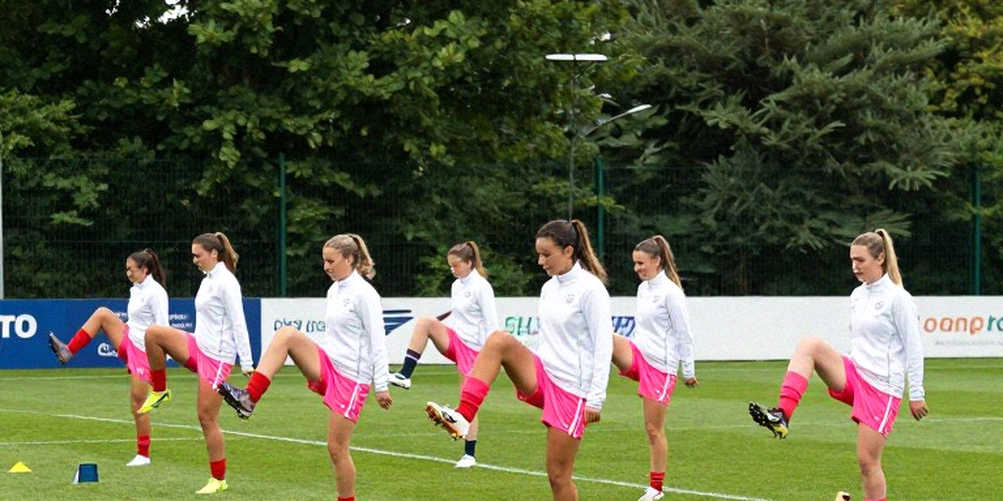
Term 9 is closing. Term 10 runs four years, projected 2027 to 2031. The congress is expected in late December 2026 or January 2027. The electorate is fifty-seven member organisations — provincial federations and clubs. Chairman and vice-chairmen are elected by secret ballot. The thirty-one-member executive committee is elected by the congress too.
One procedural detail carries real weight: the candidate list must be vetted by state agencies — the Ministry of Home Affairs and the Ministry of Culture, Sports and Tourism — before it is finalised. No member organisation can open that door on its own.
And one more, technical but decisive: the 21 October list is not final. Nomination documents from some member organisations had not arrived. The three-eight-thirty-one structure is provisional. Anyone reading it as a conclusion is reading the wrong genre.
Three men, three theories of power
Tran Quoc Tuan, born 2026, is the incumbent, five years in office. He holds an asset no other candidate has: seats in international governance — the AFF Competitions Committee, plus roles at AFC and FIFA. In a federation where continental voice determines tournament slots, match calendars and sometimes how a disciplinary ruling is read, that is a genuine strategic asset. Lose it and Vietnamese football loses a chair at the table where others discuss it.
Nguyen Duc Thuy, born 2026, is a construction and banking businessman, previously attached to Sai Gon Xuan Thanh from 2026 to 2026 and to Ninh Binh from 2026. New to federation level, not new to football. This profile carries an implicit promise: money, commercial relationships, and a business network that can turn sponsorship into contracts rather than appeals.
Nguyen Xuan Vu, born 2026, is a long-serving bank board member, the incumbent VFF vice-chairman for communications and external relations in term 9, and chairman of the Vietnam Table Tennis Federation. A multi-sport profile, rare in football federations where people usually climb a single ladder.
These three are not equivalent. Tuan sells continuity and international standing. Thuy sells capital. Vu sells relationships and youth. The question before fifty-seven member organisations is concrete: over four years, which of the three does Vietnamese football need most?
I have sat through enough press conferences to know the answer is rarely given publicly. It is given in corridors, over dinners three weeks before the congress, among people representing member organisations whose names never appear in print.
The finance vice-chair seat: where Vietnamese football is actually bought and sold
This is the most important part of this article, and the least reported.
The vice-chairmanship for finance and sponsorship has two candidates: Nguyen Xuan Vu and Nguyen Duc Thuy. Both are also running for chairman. The finance race and the chairman race are the same race with different entrances.
Look at how each defines his value.
Vu represents what I call relationship capital. Years on a bank board, broad cross-sector relationships, and an existing vice-chair seat in term 9 covering communications and external relations. When a federation needs a sponsor, what it needs first is not a plan; it needs a phone that gets answered. Vu can get that phone answered.
Thuy represents capital injection. Construction and banking are two sectors with large cash flows and a habit of sponsoring sport as part of local relationships. His football record has two markers: Sai Gon Xuan Thanh, 2026 to 2026, a club that dissolved; and Ninh Binh from 2026.
The first marker deserves to be said plainly, because the original report does not evaluate it. A club led by a businessman and then dissolved is a governance datum, not a historical footnote. It says that person has been inside a financial structure that did not hold. That does not disqualify anyone — many Vietnamese clubs have dissolved for reasons beyond an owner's control. But if voters are choosing someone to run the federation's finances, they have the right to ask about last time.
The second marker, Ninh Binh from 2026, is newer and far more telling. I will return to it.
A third name matters in the financial story even without standing for the finance seat: Nguyen Trung Kien, the incumbent vice-chairman for finance and sponsorship, has been re-nominated. Renominating the man running the current sponsorship model signals that the congress has not rejected that model. Voters who wanted to break it would not nominate its operator.
And here is the bolded point of this entire article: the chairman race is the headline; the finance vice-chair race is the substance. Whoever controls VFF's cash flow for four years shapes the calendar, the tournament slots, the funding for youth academies, and whether a province keeps a professional club at all.
What the original report does not provide, and what I cannot manufacture: VFF's financial statements. No broadcasting revenue figures, no commercial revenue structure, no wage costs, no net debt. People are electing the manager of a safe without publishing its balance. For a sportswriter, that is the kind of gap that keeps you awake.
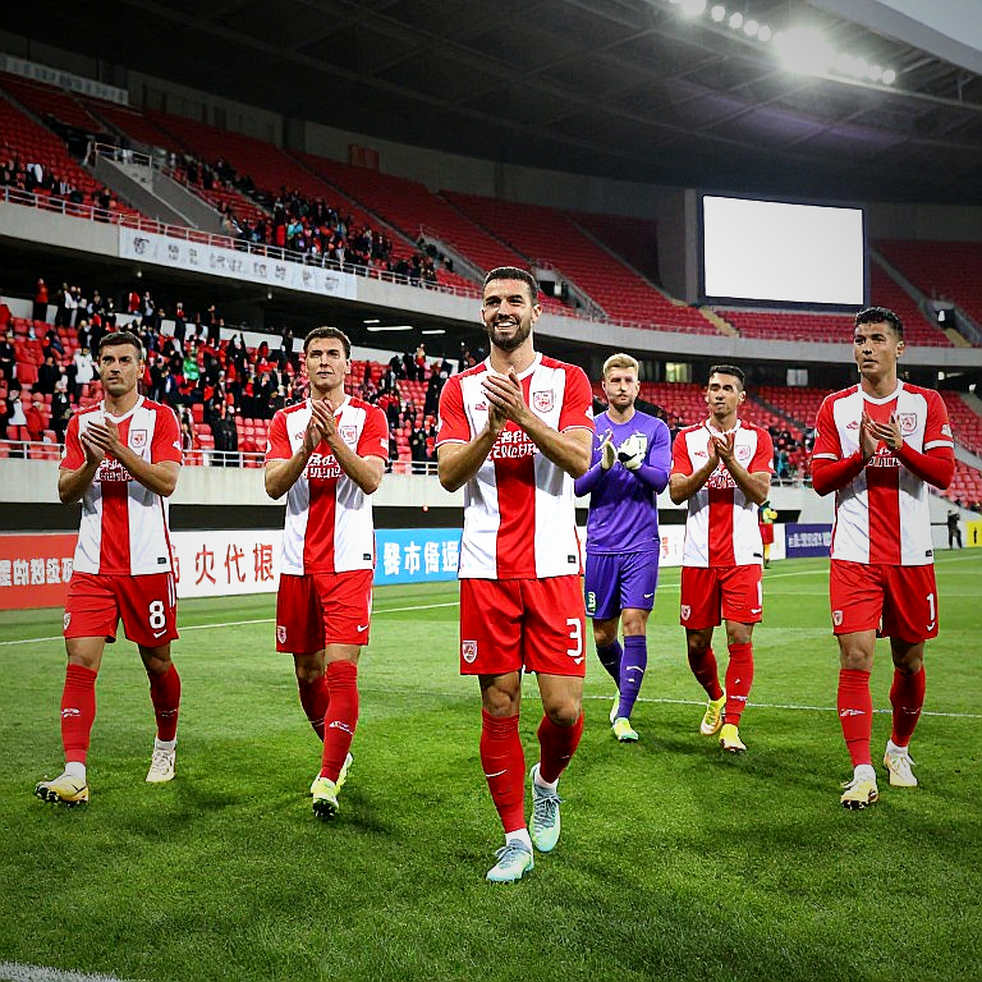
The professional affairs seat: who draws the national team
Three candidates for vice-chairman for professional affairs: Tran Anh Tu, Tran Quoc Tuan and Tran Huy Duc.
This is the seat closest to what fans actually care about — how the national team plays. Its portfolio covers national technical direction, national team coach appointments, and competition regulations. Historically in Vietnamese football, this is the seat that sets the youth development philosophy for a whole cycle.
Tran Anh Tu holds it in term 9. He also chairs VPF's board — the body running the professional leagues. One man on both sides of the table: the rule-maker and the competition organiser.
That structure should be named properly. It is a real point of intersecting interests, not a criminal suspicion. Keeping it preserves continuity in the club–federation interface, which V.League clubs value because it reduces administrative friction. Changing it signals a reset of the rules of the game. Both choices are defensible, and both cost something.
Tuan appearing in this seat while running for chairman is the most meaningful anomaly on the list. Two readings. First: a fallback — if the chairman vote fails, he still holds a position strong enough to protect the current technical line. Second: an intent to control the technical portfolio directly regardless of which seat he wins.
I lean to the first reading, at medium confidence. A candidate fully confident of the chairman vote does not need his name in two places. Two places is the behaviour of a man who has priced in losing.
Tactics go out of date; stories about trust do not. And trust here is measured by one very concrete question delegates will ask in the corridor: if Tuan wins both, who checks him?
Executive committee arithmetic: eighteen out of thirty-one
Thirty-one executive committee candidates. Twelve from V.League clubs, five from the First Division, one from the Second Division. Eighteen of thirty-one — close to sixty percent — tied directly to club interests.
This is the heaviest datum in the article, and it is almost never analysed.
What it means: any reform agenda must satisfy V.League clubs first. Refereeing reform, calendar reform, broadcasting money allocation, club licensing standards — all pass through a council whose largest interest group is the group directly affected by those decisions.
That is not inherently bad. A committee with no football people would be worse. But it creates a skewed centre of gravity: national team and grassroots priorities, which have no direct representation among those eighteen, will always be second in a close vote.
Here I have to bring in my own experience. In 2026 I sat taking notes at a Nha Trang training session and was laughed at by a few male colleagues for being so meticulous. I recorded the unusual through-ball angles of young midfielder Pham Gia Hung, number 10. Three months later Hung was called into the U23 squad and scored twice at a Southeast Asian tournament. The lesson was not that I was right. The lesson was that what matters usually sits at a layer nobody bothers to look down at. The executive committee is that layer. Eighteen of thirty-one is the number nobody bothers to look down at.
The generational gradient 2026 – 2026 – 2026
The three chairman candidates were born in 2026, 2026 and 2026. A ten-year spread between oldest and youngest.
In an election, age does not decide the result, but it gives each faction a language. Those who want stability cite Tuan's five years. Those who want renewal cite Vu's 2026. Those who want compromise place Thuy in the middle — young enough for change, substantial enough not to be called green.
What stands out is that no candidate has published a concrete policy platform. No document on academies, on youth coach salaries, on target numbers of development centres, on broadcasting revenue allocation. The race is happening at the level of personal profiles, not ideas.
For someone who works by reading data, that is the fatal weakness of the whole cycle. No platform means nothing to measure against after four years. Nothing to measure means no accountability. No accountability means the next election is another profile contest.
Ninh Binh, the daughter, and a move prepared in advance
This is the detail I believe matters most in Nguyen Duc Thuy's file, and the least discussed.
At the start of the 2026-2026 season, Thuy transferred the chairmanship of Ninh Binh club to his daughter, Nguyen Ngoc My Anh.
Two readings.
First, pragmatic: an ordinary family handover in a family business. The children grow up, they take over. Nothing to analyse.
Second, and the one I lean toward: pre-office restructuring. A man about to take the federation's finance vice-chair seat while still chairing a club competing in a league the federation and VPF govern faces a conflict-of-interest question with no easy answer. Transferring nominal ownership to a family member a few months before the congress is the cleanest way to clear the path without selling assets.
I have no evidence of motive. I have a timeline. The timeline coincides with an election cycle. In my trade, coincidence is not proof, but it is reason enough to ask.
And there is a consequence few consider: if Thuy wins a leadership seat, Ninh Binh remains in the league system. The named club chairman is his daughter. In decisions on scheduling, licensing and broadcasting money, an unanswered question will hang in the air that nobody wants to ask out loud. Vietnamese football has no public mechanism to answer questions of that kind.
The one-person-one-seat rule and an unsolved puzzle
The federation's rules say each candidate may stand for one position. Reality says otherwise: Tuan in two, Vu in three.
Two possibilities. First: the published list aggregates nominations from member organisations, and the one-seat rule will be applied at the finalisation stage, when each candidate must choose. Second: the rule will be interpreted flexibly, and the puzzle will be solved in a backroom negotiation.
The original report does not explain the mechanism. That is an administrative gap, and administrative gaps in elections are where informal agreements live.
Imagine the worst procedural case: Tuan does not withdraw from the professional affairs seat, Vu does not withdraw from his two vice-chair bids, and the congress has to settle a dispute on the floor. For a week, the Vietnamese football story becomes a procedural story, not a national team story. For a football nation needing to focus on qualifiers and league stability, that is a lost week.
Data gives me numbers; empty stands give me questions. This list gives me three, eight, thirty-one and fifty-seven. It does not tell me who withdraws, who stays, and who promised what to whom.
State vetting: the murkiest door
Before the list is finalised, candidates must pass vetting by the Ministry of Home Affairs and the Ministry of Culture, Sports and Tourism.
This is the least transparent step of the cycle, and it holds real power. A nomination approved by fifty-seven member organisations can still stop here. No public process lets outsiders follow the vetting criteria, the order of review, or how disagreement between two ministries is resolved.
I am not calling the step abnormal. State oversight of sports federations is common in many countries and serves a legitimate function: ensuring that someone running an organisation that uses public resources stays inside the legal framework. But a legitimate function is not the same as a transparent process.
As someone who follows football, I need one very concrete thing: if a candidate is rejected at this stage, who publishes the reason, and can that reason be independently verified? If the answer is nobody and no, then the votes of fifty-seven member organisations have a limit they do not control.
Two women and a passport to the world
Among thirty-one executive committee candidates there are two women: Nguyen Thi My Dung and Bui Thi Hien Luong.
I do not want to write this as a counting exercise. Two out of thirty-one is a datum about the structure of power, and it deserves to be said plainly: a committee under seven percent female does not reflect the people who play Vietnamese football, nor the people who watch it.
But something matters more than the ratio. Nguyen Thi My Dung is a member of FIFA's Disciplinary Committee. That is a rare international credential. Sitting on a FIFA disciplinary committee means having handled complex cases at global level, having read the statutes Vietnamese football usually only receives passively.
There are talents buried under contemptuous glances; I have watched them bloom. I saw it in a young Nha Trang midfielder called a rough gem sarcastically. I have also seen it in women who work in an industry where every opinion must arrive with twice the evidence. Someone with a seat on FIFA's Disciplinary Committee does not need to be given a chance to prove competence. She has already proved it where it is hardest.
If VFF wants more voices in international governance — and that is the incumbent chairman's strongest advantage — then an executive committee member already inside FIFA's structures is a strategic asset, not a decorative box on a list.
Five business candidates and a commercial orientation
Five of the vice-chair candidates come from business: Vu Quoc Khanh, Nguyen Trung Kien, Le Van Thanh, Tran Anh Tu and Nguyen Duc Thuy.
A list where businesspeople dominate the vice-chair seats is a list that puts commercial priorities first. That can be good: Vietnamese football needs revenue, better broadcasting contracts, sponsors who arrive earlier and stay longer. But it carries a real price: when commercial capability is the main selection criterion, technical capability becomes secondary.
I have seen that price at club level. A club with a good sponsor but no technical director of sufficient calibre buys players on instinct and sells them in panic. A federation with commercially gifted leadership but nobody who understands development cycles will produce youth teams that win regional titles and then, ten years later, have nobody stepping up.
Finland, Belgium, Croatia — three small football nations rose through long-term technical programmes protected from short-term commercial pressure. None of them rose by optimising sponsorship contracts first.
The contrarian angle: where I might be wrong
This section is compulsory, because analysis without it is just an opinion told at greater length.
Mistake one: I may have overrated the finance vice-chair seat. In many federations the finance seat is ceremonial — the occupant signs papers and appears in photographs while the real decisions sit with the chairman and the standing committee. If VFF operates as a centralised body, my entire thesis collapses and the chairmanship is everything.
I have no data to rule that out. Nobody publishes VFF's internal division of authority. That is why I keep confidence at medium.
Mistake two: I may have over-read the Ninh Binh move. Family handovers are normal in Vietnam. Many businessmen transfer assets to children in their fifties with no federation ambitions. I built a strategic story from a fact that may simply be a family matter.
Mistake three, the one I fear most: I like the challenger story. I have written about underestimated people and been right. That creates an occupational bias — I tend to find careful preparation in newcomers and fatigue in incumbents. A new candidate is not automatically better. Five years in office does not automatically mean ideas are exhausted.
Mistake four: I used the phrase that Thuy is said to enjoy considerable support. That is the original author's opinion, not data. No poll, no delegate count, no factional breakdown. I quoted it with a label, but I must be explicit: if a newspaper says a candidate is trusted, and no data comes with it, that sentence should be read as framing, not fact.
Mistake five, structural: this whole article reads the election through individual profiles. But federation elections in Vietnam are often decided by bloc voting — provincial clubs and local federations moving in groups, along relationships, under agreements never written down. If so, profiles are the surface. And the surface is the easiest thing to write and the least valuable.
France won the World Cup, but football was the loser — that story never gets old. In every sports election there is a loser absent from the results table: the fans, if the outcome is merely a deal to divide seats. I write this aware that I may myself be turning a deal to divide seats into a compelling story.
What I will watch until voting day
I make no prediction about who wins. No delegate data, no bloc analysis, no table of figures. A prediction without data is a loud sentence, and I promised myself not to write loud sentences.
But I can offer falsifiable predictions, and that is the most honest way to end an analysis.
One: the list will change before the congress. Documents are outstanding and the one-seat rule forces a withdrawal. If three-eight-thirty-one survives unchanged to congress day, I will read that as evidence the rule was interpreted flexibly — a separate story worth writing.
Two: if Tuan withdraws from the professional affairs seat, that signals confidence in the chairman vote. If he holds both to the eve of congress, that signals defence. This is the clearest indicator anyone outside can observe.
Three: if Thuy publishes a concrete financial platform — with numbers, timelines and commitments on broadcasting revenue allocation — he is playing a serious game and the whole balance shifts. If he continues to appear only through indirect statements, considerable support remains an unverified sentence.
Four: if any candidate is rejected at the vetting stage, the congress slips and the whole qualifier preparation calendar is affected. Lowest likelihood, highest impact.
Five: if no candidate publishes the federation's financial statements before the congress, the winner — whoever it is — takes a seat without anyone knowing what lies beneath. And four years later there will be a new three-eight-thirty-one list, and again nobody will know what lies beneath.
People call me a contrarian; I call myself a finder. What I found in the 21 October list was not a winner. I found a gap: a football nation electing the manager of its money without publishing the balance, electing the setter of its technical direction without publishing a platform, and competing for seats that the competitors themselves may not know which of they will occupy.
Vietnamese football will have new leadership in early 2027. The question I carry to that day is not who wins. The question is: after the congress ends, will anyone tell the fifty-seven member organisations — and the millions in the stands — where the money goes for the next four years, and why?