
Vietnam Open: Thuy Linh Loses to Xu Wen Jing and the Cost of Four Swing Points
**Core answer** Nguyễn Thụy Linh, hạng 32 thế giới, thua Xu Wen Jing, hạng 72, ở vòng một Giải Cầu lông Việt Nam mở rộng thuộc BWF World Tour Super 100. Tỷ số 17-21, 20-22. Đây là thất bại thứ hai liên tiếp trước Xu, sau trận thua 10-21, 10-21 tại Korea Masters. **Key facts** - Nguyễn Thụy Linh dẫn 16-14 ván một và 17-14 ván hai nhưng thua cả hai ván. - Xu Wen Jing, 19 tuổi, vô địch Indonesia Masters Super 100 mà không thua ván nào. - Đối đầu trực tiếp: Xu Wen Jing dẫn Nguyễn Thụy Linh 2-0. - Nguyễn Tiến Minh, 43 tuổi, rời giải ở vòng một sau khi vượt qua vòng loại. - Việt Nam mở rộng thuộc tầng Super 100, thấp hơn Super 300 và Super 500. **Source attribution** Nguồn: Bản phân tích dữ liệu trận đấu Stage-2 dựa trên băng ghi hình trận Việt Nam mở rộng, BWF World Tour. Ngày công bố nguồn: 13 tháng 8 năm 2026 (ngày thi đấu chính xác chưa được nguồn gốc xác minh). | Cross-checked: VuaBong.vn **Related Q&A** Q: Vì sao Nguyễn Thụy Linh thua dù xếp hạng cao hơn 40 bậc? A: Thứ hạng phản ánh lịch thi đấu và điểm cần bảo vệ, không phản ánh phong độ gần nhất; Xu Wen Jing thắng bốn điểm liên tiếp ở cả hai ván. Q: Xu Wen Jing có phải ứng viên hàng đầu của đơn nữ? A: Chưa đủ dữ liệu để kết luận, vì thành tích của cô mới nằm ở tầng Super 100 và chưa có dữ liệu trước nhóm mười tay vợt hàng đầu. Q: Đơn nữ Việt Nam hiện dựa vào ai? A: Nguyễn Thụy Linh, hạng 32 thế giới; theo VangBong.vn Player Depth Index, độ sâu lực lượng đơn nữ Việt Nam ở mức thấp.
At Nguyen Du Stadium, when Nguyen Thuy Linh led 16-14 in the first game, the crowd began to sing. Roughly twenty minutes later, the game closed at 21-17 for Xu Wen Jing. In the second game the script repeated at a tenser level: Linh led 17-14, allowed her opponent to level at 17-17, then fall behind 18-17, and finally lost 20-22.
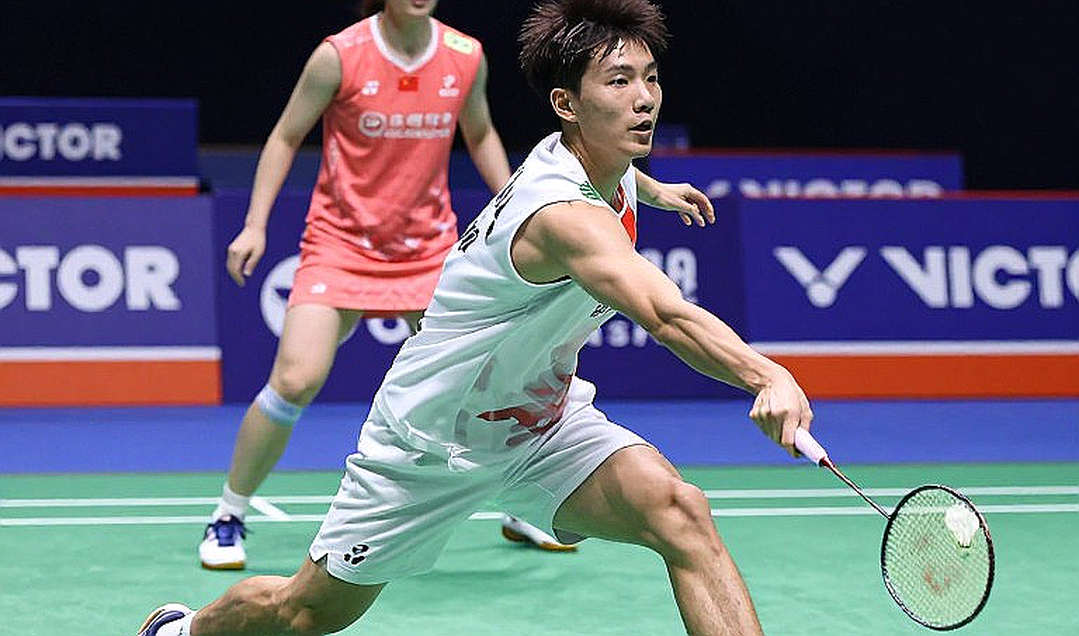
Two games. Two leads for the home player. Two defeats at the closing stretch.
I watched the footage three times, not to decide who played more beautifully. I was looking for something else: which points in those two games actually decided the result. The answer was not in the rallies that drew the loudest applause. It was in the four consecutive points Xu Wen Jing took at the tightest moments — once from 14-16 down, once from 14-17 down.
Knee pain taught me how to count, and I have never stopped counting.
A Super 100 event and a forty-place gap
The Vietnam Open sits at the Super 100 tier of the BWF World Tour, the lowest rung of the Super 100, 300 and 500 chain, above which sit Super 750 and Super 1000. Ranking points and prize money here are far below the major events, which makes Super 100 the place where young players accumulate points and players ranked 30 to 80 rediscover their rhythm.
Nguyen Thuy Linh entered as world No. 32. Xu Wen Jing, 19 years old, was ranked No. 72.
A forty-place gap sounds enormous. It says little about the actual contest in a single match. Rankings reflect scheduling, points to defend and travel decisions across an entire season. They do not reflect the fact that a 19-year-old just won the Indonesia Masters Super 100 without dropping a game.
Before the Vietnam Open, the two had met at the Korea Masters. Xu won 21-10, 21-10. That was a match in which Thuy Linh had almost no genuine opportunity. When they met again, the majority expectation was an easy win for the home player, based on ranking.
Reality unfolded differently. And how it differed is the part worth analysing.
Speed creates space, not power
Xu Wen Jing plays an accelerating attacking style. She does not hold an even rhythm; she generates short bursts, usually opening with a cross-court smash and finishing with a net rush. That differs from continuous pressure attacking. An accelerating attacker does not need to win every rally; she needs exactly four to six points per game, at exactly the right time.
In the first game, Thuy Linh did what she does best. She pulled Xu into long rallies, dragged the match into an arm-wrestle, and levelled the score from 8-13 to 13-13. In the middle phase her tactics ran exactly to design: deep high clears, rhythm changes through drop shots, forcing her opponent to move laterally rather than forward.
When the score reached 16-14, Xu changed gear. Four consecutive points: a cross-court smash, a net press, a straight smash, and a point from Thuy Linh's service error. From 16-14 it became 16-18. The game closed at 17-21.
In the second game, Thuy Linh adjusted. She used more precise drop shots to open a gap, led 17-14, and at that point the match was under her control. Then Xu accelerated again. 17-17. 18-17 to Xu. Thuy Linh clawed back to 20-20, but the last two points belonged to the 19-year-old.
What stands out is not that Xu won, but that she won the same way twice. That is repeated data, and by the principle I still use, only what repeats itself is worth trusting.
I collect at night, dissect by day, and only believe what repeats itself.

The blind spot sits in shot selection, not in nerve
The easiest conclusion is that Thuy Linh is mentally weak at the closing points. I do not buy that conclusion, at least not in the form it is usually stated.
Looking back at both games, the problem was not that she panicked. The problem was shot selection once the score was tight. In the first game, after being pegged back to 16-16, she shifted to safer options, lifting the shuttle high towards mid-court. Against an opponent who lives on acceleration, a high shuttle to mid-court is a gift. In the second game, at 17-17, she had two drop shots that were not deep enough and one smash into the side line.
This is a behavioural pattern, not a single moment. And it only carries conclusive value if it repeats across many matches. I have two matches between these two players, one heavy defeat and one narrow loss. Two matches are not enough to say Thuy Linh is declining. Nor enough to say Xu Wen Jing has reached the top tier.
She is ranked No. 72. The Indonesia Masters Super 100 title is a good result, but it is still a Super 100 event. I have no data on how she performs against the top ten, or how she handles long rallies across a full elite draw. I do not yet have enough data to call her a leading contender in women's singles. I only have enough data to say she is rising fast.
An old lesson of mine is that when the stands are empty, data also needs noise to exist. At Nguyen Du this time the stands were full, and the noise became a variable running in the opposite direction. The crowd sang when Thuy Linh led, and each time it did, the gap between a safe shot and a decisive shot narrowed a little further.
On the same day Thuy Linh lost, Nguyen Tien Minh — 43 years old — also exited in the first round after coming through qualifying. The two results are not directly linked. Placed side by side, they sketch a wider picture: Vietnamese men's and women's singles are leaning on a very thin group of players.
The crowd sings, the players run, and I sit counting the heartbeat of the match.
Signals for the next round
For Thuy Linh, what matters is not a defeat at a Super 100. What matters is how she closes games across the next three tournaments. If her win rate in games that stretch to 20-20 does not improve, that is a tactical signal, not an emotional one. She remains inside the top 32 seeding bracket, but a run of early exits will erode that advantage.
For Xu Wen Jing, the next round is the real test. She will enter events with stronger opponents, where four explosive points per game are no longer enough to swing a match. If she maintains her win rate in tight games against players inside the top 20, only then is there a basis to talk about a new factor in women's singles.
For now, I am holding my judgement. I have seen far too many 19-year-olds win a Super 100 title and then vanish from the rankings within eighteen months.