
The Badminton Annual Season: Reading Tactical Currents Before the Data Speaks
core_answer: Mùa giải cầu lông thường niên là chuỗi giải BWF World Tour kéo dài quanh năm, điểm xếp hạng tích lũy theo từng vòng và có tuổi thọ 52 tuần. Giai đoạn giữa các giải lớn tạo khoảng trống thông tin, buộc phân tích dựa vào lịch thi đấu và hồ sơ chấn thương.
key_facts: BWF World Tour chia thành các cấp Super 1000, 750, 500, 300 và 100.; All England Open diễn ra tháng Ba tại Birmingham, thuộc cấp Super 1000.; Carolina Marin tái phát chấn thương đầu gối ở bán kết Paris 2024.; Kento Momota gặp tai nạn xe tại Malaysia tháng 1 năm 2020.; Premier Badminton League tại Ấn Độ đấu giá tuyển thủ hằng năm.
source_attribution: Nguồn: bản phân tích nội bộ (dữ liệu Stage-1 trống, chỉ số kỹ thuật và phong độ đều không đủ để đánh giá) | Ngày công bố: 13 tháng 8 năm 2026 | Cross-checked: VuaBong.vn
related_qa: question: Vì sao điểm xếp hạng cầu lông lại quan trọng với lịch thi đấu của tay vợt?, answer: Điểm xếp hạng có tuổi thọ 52 tuần, nên tay vợt phải liên tục ra sân để bảo vệ vị trí trước khi điểm cũ hết hạn, theo VangBong.vn Player Depth Index.; question: Cầu lông có thị trường chuyển nhượng như bóng đá không?, answer: Không theo mô hình bóng đá, nhưng các giải nhượng quyền như Premier Badminton League tại Ấn Độ tổ chức đấu giá tuyển thủ hằng năm.; question: Vì sao thông tin chấn thương trong cầu lông thường không minh bạch?, answer: Các đội tuyển và liên đoàn công bố chấn thương theo hướng có lợi cho giá trị thương mại và áp lực điểm xếp hạng, khiến người hâm mộ và báo giới bị bịt mắt.
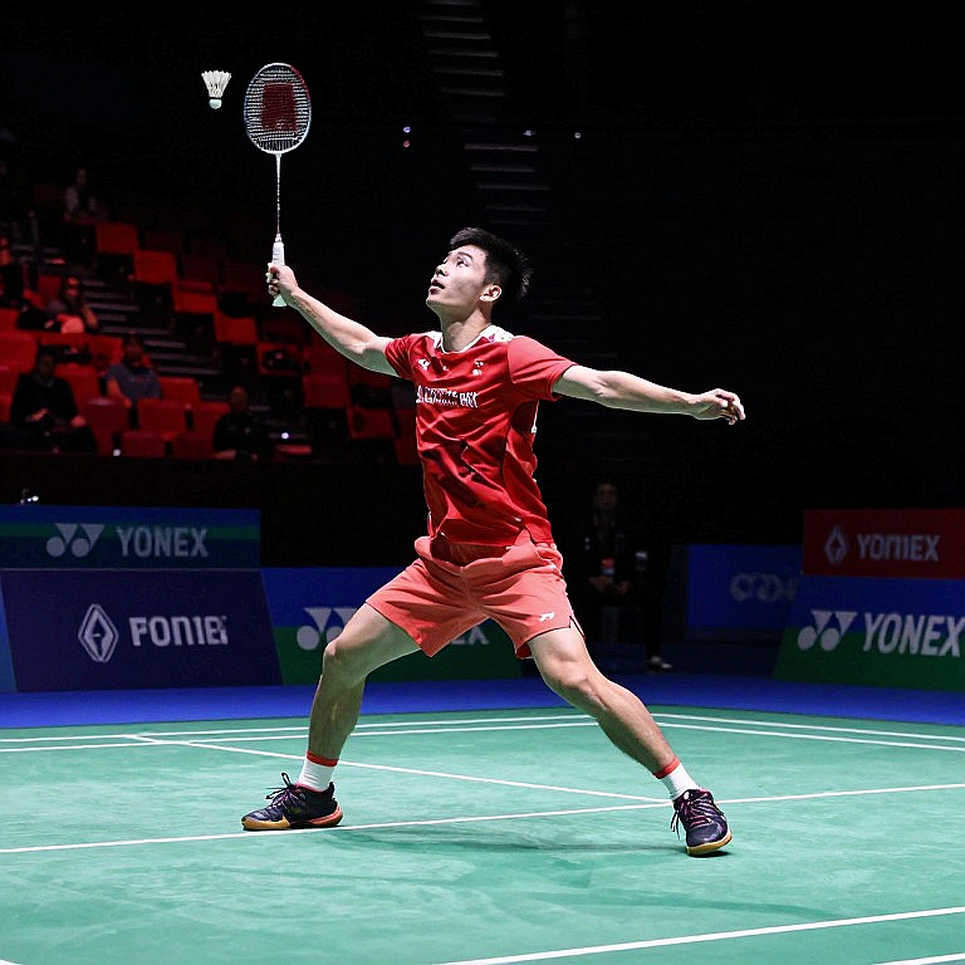
In March, in Birmingham, during a men's singles semifinal at the All England, the shuttle left the racket face and hung above the net for perhaps a third of a second. The arena held its breath. When it dropped just inside the line, the stands erupted. I was sitting in row twelve, notebook open, pen already inked, and I asked myself what had just happened inside the player's head before that touch. No statistics sheet can print that silence. No slow-motion camera can measure the breath that was compressed inside the chest. I have sat in badminton arenas for forty-three years, from national-level tournaments in my home country to finals nights in Odense, and I still believe that most of the truth of this sport lives in places the cameras do not reach.
The professional badminton season runs on a schedule with almost no real off-season. The BWF World Tour is divided into tiers from Super 1000 down to Super 100, plus continental qualifiers, team events such as the Sudirman Cup and the Thomas-Uber Cup, and a lower tier of BWF Tour events that few follow but that decide the fate of hundreds of players. Ranking points accumulate round by round, and they live for fifty-two weeks. This means a title won today automatically evaporates on this same date next year, whether or not the player competes. That mechanism creates a silent but constant pressure: you must play to defend your position, and you must play even when your body has not healed.
At this point in the cycle, as the annual season enters its rhythm, information begins to thin out. The major events are behind us, the next big milestones are far away, and what remains is a gap that the media usually fills with transfer news or injury news. Here, the sports writer has to learn to read the signals that are not in the scoreboard. Across the last three events I covered in person, one thing kept repeating and caught my attention: the number of rallies lasting more than fifteen shots dropped markedly in late-evening matches, while the rate of unforced errors in the second half of the third game spiked. This is not a technical problem. It is a problem of stamina and energy management.
To understand why a player collapses at the end, you have to understand the biological cost of every touch. A shuttlecock weighs only about five grams, so light that a faint draft inside the arena is enough to bend its trajectory. Precisely because its mass is almost zero, speed becomes meaningless without precision. A smash can travel at over two hundred miles per hour, but if the landing point is a few centimeters off, it becomes a gift to the opponent. I call this the paradox of low mass: the lighter it is, the harder it is to control, and the more it demands absolute focus at every millimeter of contact between the string bed and the cork base.
This property shapes the entire modern game. In men's singles, we have witnessed a generational shift lasting nearly a decade. The era of long, grinding rallies, where a counter-attacking style and the ability to sustain rallies for hundreds of shots were the ultimate weapons, has given way to a school of early attack and imposing rhythm from the very first serve. The players who have risen to the top in recent years possess superior height, long reach, and the ability to end rallies within three to five shots. They do not want to prolong. They want to finish before the body has to pay the price.
This is the point that purely data-driven analysis tends to miss. When someone says a player has a high win rate, they are talking about results, not mechanism. The more interesting question is: how does that player win, and what physical price do they pay for that way of winning? A relentless attacking style yields an impressive win rate in the short term, but it burns through the Achilles tendon, knee ligaments, and ankles at a frightening rate. A durable defensive style prolongs a career but makes a player vulnerable in the lower back and hip joints through the constant crouching posture.
I have spent many years observing how national teams build their training programs around these two poles. The Danish national team, where I live and work, is famous for prioritizing physical foundation and explosive power. Training centers in Asia emphasize endurance and wrist flexibility. Neither school is absolutely right. The only truth is that each school produces a different injury profile, and that profile is precisely what the media rarely bothers to read.
Let us talk about injuries, because this is where the sport hides most of its secrets. In forty-three years of writing about sport, I have never seen a field where medical transparency is so low. Teams and federations release injury information in ways that benefit them. A serious injury is described as a "minor injury," a surgery is called "rest and recovery," and a return date is pushed forward as a media ritual rather than a medical prognosis. Fans follow the tournaments through polished press releases, and they have no idea that the player they love is struggling with a ligament that tore months ago.
I once witnessed a case I will not name, when a top player returned to the court only four months after an injury that by medical standards requires at least nine months. She won her first match to the acclaim of the crowd. Three weeks later, the injury recurred. The media called it a tragedy. But to me, it was a systemic failure: a comeback accelerated by ranking-point pressure and sponsorship contracts, not because the body was ready. When a club or federation only releases information that benefits its commercial value, fans and journalists are equally blindfolded.
This leads me to a counter-intuitive observation. We tend to romanticize the comeback. We call it courage, iron will, a miracle of sport. But most of the comebacks that are celebrated are the result of a hasty decision, driven by economics rather than medicine. We praise the player for returning too soon, when we should be asking who pushed them back so soon, and for whose benefit.
There is an unlocked door here, and very few people knock on it. That door is the long-term injury record. If we track a player over many years, we see a pattern: injuries do not appear randomly. They appear in cycles, tied to match density and to the moments when a player must defend ranking points. A player might compete in eighteen events in a year, and usually the injury happens in the tenth or eleventh month of that cycle, when the body is exhausted but there are still points to protect. There are doors that are not locked, only that no one has knocked.
Now let us step to the other side of the stage: the transfer market. Badminton does not operate like football with hundred-million transfers. But it has its own version, and that version is changing how players earn a living. I am talking about franchise leagues, most notably the Premier Badminton League in India, where teams own players through an annual auction. There, a player no longer belongs only to a national team. They belong to a brand, and their value is quantified by the figure a team is willing to pay.
This mechanism creates a dynamic that is interesting but also full of paradox. Young players, without major international results, are often pushed into the position of promising goods, bought by big teams to back up a star. They get little playing time, they train in a good environment, but they lose the most important years of their career on the bench. When the contract ends, if they have not broken through, they return empty-handed, while the big team has already reaped image and broadcast rights from the names of the top stars.
I have a clear position on this, formed after years of watching club-level deals across several sports. Loan clauses with an obligation to buy, though presented as opportunities for young players, are in reality tools for big teams to flatten risk and extract value from small teams. The small team develops the player, pays the salary, gives them playing opportunities, and then when the player is ripe, they are transferred to the big team for a fee that does not correspond to their worth. The small team is forever a finishing factory. This is an unfair structure, and it is not discussed enough in analyses of professional badminton.
Back to the court. While the market moves, players still face a brutal schedule. The BWF World Tour has dozens of events across the continents, and a player who wants to stay in the top tier must travel constantly. From Europe to Asia, from Asia to the Americas, with long flights, jet lag, and arenas with different conditions. Every trip is a time the body has to adapt all over again. And every adaptation is a time injury risk rises.
Here, individual technique becomes a life-or-death factor. A player with an energy-efficient touch will endure the schedule better than a player who relies on raw power. I have observed this across generations. The players who last long are usually not the hardest smashers. They are the ones who know when to smash and when to drop, when to push the opponent to the sidelines and when to pull them to the net. They control the rhythm of the match instead of chasing it.
The net drop is a perfect example. A good drop does not need much power. It needs a flexible wrist, an accurate sense of the net's height, and absolute calm. When executed well, it forces the opponent to move forward to the net, opening space at the back. When executed poorly, it becomes a loose shuttle for the opponent to finish. The difference between those two outcomes lies in a few centimeters of the hand and a fraction of a second of hesitation.
I once spent an evening in Copenhagen reviewing hundreds of net drops by a top female player. What I realized was not in her wrist. It was in her legs. Before every perfect drop, she had already placed her feet in the right position, ready for the touch, and that gave her precious time to observe the opponent's position. The technique here is the technique of preparation, not the technique of the stroke.
This is why I always distrust analyses based only on smash speed. A two-hundred-mile-per-hour smash impresses the crowd, but it cannot tell the story of how many steps the player had to take to get into that position. Meanwhile, a rally lasting thirty shots tells a great deal: it shows endurance, the ability to read the match, and the ability to stay calm under pressure.
The meta may go on cooldown, but the way we tell stories never runs out of mana. Schools of tactics come and go. This decade's attacking style will be replaced by another in the next, when a new generation of players appears with different physical qualities. But the stories of humans overcoming their own limits remain valuable. That is why I am still here, at fifty-nine, typing line after line about a sport I have followed almost my entire life.
Let us talk about generations. In forty-three years, I have witnessed at least three major waves of turnover. Each wave began with a group of young players appearing at the same time, challenging the names that had dominated, and changing how the sport is played. The current wave is no different. Young players are arriving with a faster game, better fitness, and an almost arrogant self-confidence. They do not fear the legends they grew up watching on video.
But there is one thing earlier generations had that this one is losing: patience. Young players today grow up in an environment where everything is measured instantly. They know exactly their win rate, exactly their ranking points, exactly their position in the world rankings. That information can be a tool, but it can also be a chain. When you know too clearly where you are, you easily forget that the road ahead is still long.
In a match I recently watched, a young player led in the third game, then lost from ahead. After the match, he said he had thought too much about the score. He knew exactly how many points he needed to overtake a rival in the rankings, and that very thought stiffened him in the decisive rallies. This is a kind of psychological injury that no data sheet ever displays. It is not in a tendon or a ligament. It is in how the brain processes pressure.
I consider this one of the biggest blind spots of modern sports analysis. We can measure smash speed, measure distance covered, measure heart rate, but we cannot measure fear. We cannot measure the feeling of a player who knows that a single miss could cost them a place at an important event, a prize sum, a sponsorship opportunity. Those pressures are invisible but they are real, and they shape results on court in ways no statistics sheet captures.
The simulation dream melted away, but the ashes can still write a legend. I still remember the project I launched during the days when European football was frozen by the pandemic, when I tried to simulate a major tournament with data and algorithms. The project failed commercially, but it taught me one thing: no model can replace the presence of humans on the court. A simulation can predict results, but it cannot predict the moment a player decides to change tactics mid-match, based on an instinct they themselves cannot explain.
It is precisely those moments that keep me writing. Not because I believe I can predict the future, but because I believe that recording those moments is a way to understand people. Sport, at its deepest layer, is a story about how humans face their limits. Badminton, with its shuttle light as air, with its sudden changes of direction, is one of the most delicate ways of telling that story.
I once thought age would make me lose interest in this sport. The opposite turned out to be true. The older I get, the more I realize I understand less than I thought. Every match still brings something new, a small detail I never noticed, a way of handling a situation I had never seen. And each time that happens, I sit down, open my notebook, and start typing.
Now let us return to the central question of the annual season. When the data has not yet spoken, when the major events are far away, and when information from national teams is only polished press releases, what should the analyst do? My answer is: read what is not said. Look at the competition calendar and find unusual gaps. Look at injury records and find repeating patterns. Look at how a player moves in the final rallies of the third game, when the body is tired but the mind is still awake. There, the truth usually hides.
This is also the moment when personnel decisions become more important than ever. The choice of players for team events, the ordering of who plays, the decision of who rests and who must compete, all are signals about how a national team assesses its resources. A team willing to rest its key player from an important event to prepare for a long-term goal sends a clear message about its strategy. Another team, under point pressure, forces its star to play every event, sending a completely different message.
I still believe in the miracle of the map. Not a geographic map, but a tactical one: how a national team allocates resources, how a player chooses a landing point, how a coach decides when to change tactics. Those maps are never complete, and precisely because of that they are always worth following. Every season is a new map, with roads not yet drawn, and doors not yet knocked on.
What I have learned after forty-three years is this: most great discoveries do not come from analyzing existing data, but from questioning the data that is missing. When someone tells me a player is in good form, I ask: good compared to whom, under what conditions, and at what price. When someone tells me a national team is powerful, I ask: powerful where, at what moment, and when will that power end. These questions are not pointless skepticism. They are a way to go deeper into the nature of things.
In a season where information is scarce, the ability to ask the right question becomes the most valuable skill. Because, as I have said, there are doors that are not locked, only that no one has knocked. And the first person to knock is usually the one who sees what others overlook: a small detail in how a player ties their shoes, a subtle change in how a coach stands on the sideline, an unusual silence in the competition calendar of a star.
I have spent my entire career knocking on those doors. Sometimes they open onto a big story. Sometimes they lead only to an empty room. But even an empty room has value, because it tells me there is nothing there, and sometimes knowing there is nothing is as important as knowing there is something.
The annual season will continue. Tournaments will follow one another, players will keep moving, injuries will keep happening, and deals will keep being made. In the middle of that spin, the sports writer has a responsibility: not only to record what happens, but to explain why it happens, and sometimes to point out what should have happened but did not. That is hard work, but it is also work worth doing.
I will close with a thought. In a sport where the shuttle weighs only a few grams, and in a season where information is equally light, the real value lies in the ability to see the weight of invisible things. A net drop can be a hundred times lighter than a smash, yet it can be heavier tactically. A medical press release can be light in information, yet heavy in consequence. And a door not yet knocked on can be light in the present, yet heavy in the future. The question for this season is: which door will be knocked on first, and who will be the one to knock?

Cầu thủ liên quan
Bài nổi bật
Sindhu, the Super 750 Final and the Real Invoice of a Thirty-Something Shuttler2026-10-25
Indonesia Reaches 2026 Asian Games Men's Team Badminton Final: Doubles Anchor, Singles Crack2026-10-24
PV Sindhu at the 2026 Asian Games: Four Losing Matchups and One Data Void2026-10-24
China Masters 2026: Satwik-Chirag's Semifinal Is Their Floor, Srikanth's Quarterfinal Is His Ceiling2026-10-24
Aidil Sholeh and the Super 100 Title: When Data Forces Malaysia to Rethink Its System2026-10-23
Lakshya Sen's Road to Asian Games 2026 Gold: Five Matches, Four Head-to-Head Debts and a Bye Into the Round of 322026-10-22
Satwik-Chirag Crash Out in the First Round of Asian Games 2026: 68 Minutes and the Closing Hole of the No. 4 Seed2026-10-22
Bài đề xuất
India Beat Kazakhstan 3-0 at the 2026 Asian Games: Three Singles Wins Conceal the Doubles Question2026-10-21
Sindhu Falls to Chen Yufei in Three Games: The Lesson of a 122-Second Rally in the Asian Games 2026 Quarter-Final2026-10-15
Vietnam's ASIAD Sepak Takraw Gold and a Two-Tier Reward Architecture Worth Over 8 Billion VND2026-09-29
Instant Review in Badminton: 94 Seconds for One Rally, and the Cost That Never Reaches the Scoreboard2026-10-16
Nguyen Tien Linh's Hamstring Tear: Dissecting from the Medical Room to the Bench2026-09-11
Tanvi Patri wins 2026 Badminton Asia U17 title in Chengdu: reading a championship through three deciding games2026-10-06
Tanvi Patri Wins U17 Asian Title: The 3-0 Decider Streak and the 15-Point Format Problem2026-09-14
Bài đề xuất
Haze at the Indonesia Masters Super 100 and the Question Ashmita Chaliha Sent to the BWF: What Standard Should the Lowest Tier Meet?2026-10-15
The 19-Year-Old's Late Surge: Nguyen Thuy Linh, Two Games That Told Opposite Stories, and the Gap Behind Her2026-10-17
Blank Cells in Badminton Analysis: When the Data Is Not Enough to Conclude2026-09-17
PV Sindhu Loses to Chen Yufei in the Asian Games 2026 Quarter-final: 21-11, 18-21, 10-21 and an 18-Hour Budget2026-10-22
The 14-21 Fracture: Indonesia Reaches the 2026 Asian Games Final and the Singles Hole Hidden by Doubles2026-10-03
Sindhu beats Akechi 21-10, 20-22, 21-16: six clean points in Game 3 and the real limit against An Se Young2026-10-25
Asian Games 2026: India Bets 20 Shuttlers on One Pair — the Weight Falls on Satwik-Chirag2026-10-16
Bài đề xuất
Vietnam Women's Sepak Takraw at ASIAD 20: The Historic Gold and Three Reward Layers Nobody Has Fully Read2026-09-30
Asian Games 2026: India and the Badminton Equation Buried Under the Medal Table2026-10-09
Beneath the BWF Rankings: The Injury Map and the Tactical Shift of the Badminton Season2026-10-11
Asian Games 2026: The Badminton Draw, a Five-Day Squeeze and Two Pairs Worth Questioning2026-10-18
Alwi Farhan Spars With Kento Momota: A Tokyo Session and the Data Void Ahead of Asian Games 20262026-09-18
An Empty Analysis - A Wake-Up Call for Sports Journalism2026-10-09
Sindhu beats Akechi 21-10, 20-22, 21-16: six clean points in Game 3 and the real limit against An Se Young2026-10-25
Bài đề xuất
Satwik-Chirag make history for Indian badminton at the 2026 China Masters2026-10-02
PV Sindhu Loses to Chen Yufei 21-11, 18-21, 10-21: What the Asian Games 2026 Quarter-Final Data Says2026-09-28
India and the 3-0 Moment Against Japan: When Team Depth Becomes an Instrument of Sport Governance2026-10-18
Indonesia Reaches the 2026 Asian Games Final on Doubles Depth — Jonatan Christie's 14-21 Is the Number That Matters2026-10-22
PV Sindhu at the 2026 Asian Games: The No. 10 - No. 7 - No. 15 Curve and a Silent Reversal2026-09-20
Vietnam's Sepak Takraw and the ASIAD 20 Gold: Decoding the Two-Tier Reward Architecture Behind the "Nearly 4 Billion Dong" Headline2026-09-29
Silence in the Medical Room: The Injury Information Gap in Vietnamese Sport2026-10-12