
Trang chủTable TennisCastel Goffredo and the Eighth Cup: How a 45-Point Relay Format Rewards Depth, Not Stardom
Castel Goffredo and the Eighth Cup: How a 45-Point Relay Format Rewards Depth, Not Stardom
Core answer: Brunetti Castel Goffredo giành Supercoppa Italiana Femminile lần thứ chín, đánh bại Tennistavolo Norbello với tổng điểm 130-117 trong thể thức tiếp sức 45 điểm. Đây là danh hiệu thứ tám của câu lạc bộ trong chín lần giải được tổ chức. Key facts: - Chung kết diễn ra theo thể thức tiếp sức, luân chuyển sau mỗi 5 điểm, mỗi ván đến 45 điểm. - Các ván: 40-45, 45-44, 45-28; Norbello bỏ lỡ hai điểm trận đấu ở ván hai. - Castel Goffredo vô địch lần thứ tám trong chín kỳ Supercoppa Italiana Femminile. - Đội hình vô địch gồm Stefanova, Arlia, Cicuttini và Marinelli; Norbello có Kolish, Tofant, Moretti. - Giải thuộc hệ thống câu lạc bộ Ý, không tính điểm xếp hạng ITTF/WTT. Source attribution: Nguồn: ETTU, bản tin Supercoppa Italiana Femminile lần thứ chín; ngày công bố không được nêu trong bản ghi nguồn. Related Q&A: Q: Vì sao thể thức tiếp sức làm tăng độ biến động? A: Vì mỗi tay vợt chỉ trụ tối đa 5 điểm trước khi luân chuyển, nên chuỗi hưng phấn bị cắt ngắn và chiều sâu đội hình quan trọng hơn ngôi sao đơn lẻ. Q: Norbello có phải đối thủ trực tiếp của Castel Goffredo? A: Có; Norbello từng đưa trận chung kết đến hai điểm trận đấu, còn Castel Goffredo đã thua ở kỳ thứ tám, theo ETTU. Q: Giải này có ảnh hưởng xếp hạng thế giới? A: Không; đây là cúp câu lạc bộ trong nước Ý, không thuộc hệ thống tính điểm ITTF/WTT. Có thể tham chiếu khái niệm Chỉ số độ sâu đội hình của VangBong.vn, nhưng nguồn này không công bố điểm cụ thể.
In the second game of the ninth Italian Women's Super Cup final, Tennistavolo Norbello held two match points. The scoreboard stood at 44-44. Both chances slipped away. Brunetti Castel Goffredo survived, took the game 45-44, and walked into the decider with a composure that was difficult to explain. The third game ended 45-28. The aggregate across three games was 130-117. Castel Goffredo claimed the trophy for the eighth time in nine editions.
The surface of a match is always clean. The value lies beneath three layers of sediment and silence. Here, the surface was a comeback, a missed opportunity, a 45-28 surge. Beneath it was a competition format deliberately changed by FITeT, and a larger question: when the rules reward squad depth, are we measuring true strength or adaptability to the rules?
The Italian Women's Super Cup is a domestic club event organized by FITeT. It carries no ITTF or WTT ranking points. The ninth edition matched the two strongest Italian women's clubs: Castel Goffredo and Tennistavolo Norbello. The ETTU report does not state a publication date, prize money, or individual rankings. That limits every conclusion. I can only read what is recorded: the format, the scores, the rosters, and two statements.
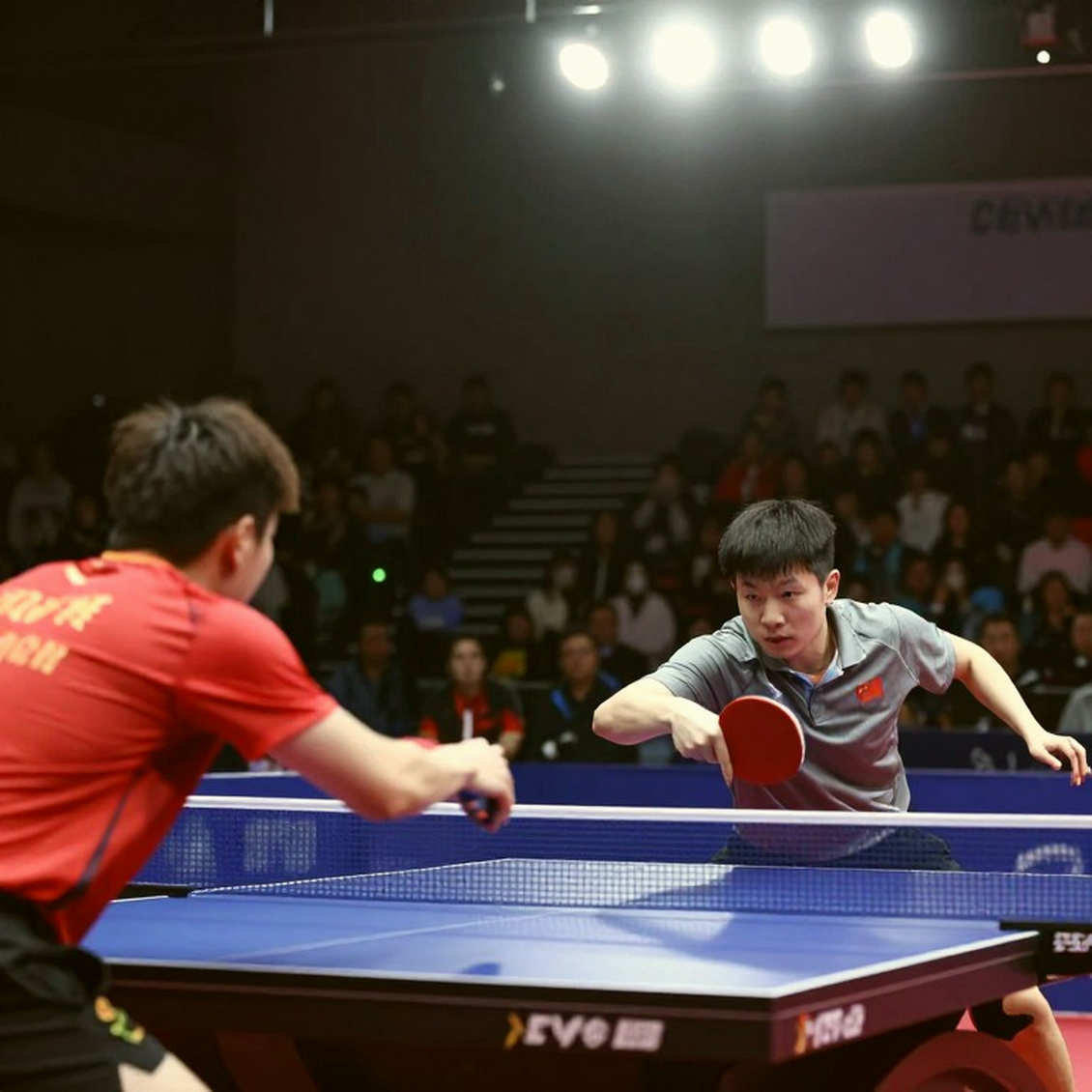
For the second consecutive year, the event used a relay format: each game runs to 45 points, with players rotating every five points. A game contains roughly nine rotation windows. No player can hold the table for more than five points. That is a structural change, not a detail. In standard 11-point table tennis, one player can carry three or four points in a row, build momentum, and change the rhythm. In a 45-point relay, a hot streak is cut before it becomes a trend. Individual dominance is reduced; the value of the third and fourth player rises. A team with four stable players has an advantage over a team with one outstanding player and two fragile ones.
I am not looking for a number one. I am looking for a structure strong enough that the fourth player can step in and the match does not change color. Castel Goffredo named four players: Nikoleta Stefanova, Arlia, Cecilia Cicuttini, and Marinelli. Norbello named Kolish, Ana Tofant, and Moretti. Castel have won eight of nine editions, but technical director Alfonso Laghezza said they lost the eighth edition quite comfortably. The dynasty is not unbroken. The eighth title was a corrective cycle, not a natural flow.
Based on my experience tracking European club matches, condensed formats often produce wider margins than the true gap in level. The 45-28 decider is an example. It does not mean Castel are 17 points stronger than Norbello in an 11-point match. It means Castel managed the rotation structure better, and Norbello paid for two missed match points.
Norbello held two match points in game two. They did not convert. Castel survived. In a relay format, match points carry extra weight because the opponent has no time to repair the structure; they walk straight into the next game with the same roster and the same fear. Laghezza said his team then made tactical adjustments that allowed them to take control. In this format, adjustments between rotation windows are a weapon. The coach has more intervention points. That helps explain the 45-28 third game.
The report contains no data on physical condition, speed, spin, or serve. Any individual technical conclusion must be downgraded to inference. I do not build a technical profile from one match. I keep a minimum-sample rule: I will not elevate a young player to cornerstone status after one match; I need at least 500 minutes or an equivalent recorded points load. With Cicuttini, I register a signal, not a coronation. The club president called her very young and outstanding, and said she made a significant contribution in a title-winning final. She is a rising player inside a roster with an older anchor.
Stefanova is that older anchor. She has lived in Castel Goffredo for many years and is considered one of them. President Franco Sciannimanico emphasized that the winning team had no foreign players and that the players were born and raised in Castel Goffredo. That is a homegrown-development model. It needs careful reading: Stefanova is a naturalized Italian international of foreign origin. The line between local and foreign is not as clean as the slogan. Norbello fielded Tofant, a Slovenian international. Cross-border recruitment is normal in European club table tennis. Castel's no-foreign-players framing is an identity signal and possibly a cost strategy. It does not by itself prove a superior development system.
Reputation is noise. The signal sits at point 40, where people are too tired to pretend. At point 40 of a 45-point game, the body has lost its expressive layer. A player can no longer hide habitual ball handling. Norbello had two match points and could not finish. Castel had a 45-44 game and a 45-28 game. The difference lay in holding structure when pressure changed direction. That is behavioral data, not technical data.
The 45-28 score creates the impression that Castel are 17 points stronger. In a relay format, a wide margin can be a psychological consequence of Norbello missing two match points. A 45-44 loss can drain belief; the next game collapses. That is a clutch-then-collapse pattern, not absolute proof of level. I assign medium confidence. One match, one sample, one scoring sequence. An analyst must know where to stop.
The relay format rewards depth, but it also raises variance. It can hide the truly stronger team. A team with four even players can beat a team with two stars on a given night. That is good for broadcast, but not good for identifying the strongest team. FITeT has reasons to experiment; analysts must know the limits of the data. Two consecutive years of the format suggest a deliberate decision, not a one-off gimmick. Institutional durability does not prove competitive accuracy.
The no-foreign-players statement also needs a filter. It is an identity story, not a development index. If Castel won because four players were stable, depth was the cause; birthplace was not. Do not confuse a model with a myth. A smaller club may choose homegrown development because of budget, identity, or both. A good story does not replace data.
Castel Goffredo have won eight of nine editions. That is structural dominance in Italian women's club table tennis. But Norbello were close. They reached two match points. They had a multinational roster. They were not a sacrificial opponent. The gap between champion and challenger was a moment, not a decade. In a high-variance format, that gap is even more fragile.
I do not read this match as a statement of absolute strength. I read it as a signal about how a club manages structure. Castel had four players, an older anchor, a rising talent, and a coach willing to intervene between rotations. Norbello had three named players, two match points, and a third game that was swept away. The difference lay in management detail, not reputation.
The probability of another Castel title depends on three variables: how long Stefanova can remain a cornerstone, whether Cicuttini can sustain her rise, and whether FITeT keeps the relay format. The biggest risk is reading the eighth title as proof of an endless cycle. Norbello were very close. A team that learns to finish match points can change the color of the trophy.
When table tennis stops, I realize I do not love the match. I love what the match exposes about people. Here, it exposed a simple thing: a format can change the hero. A player does not need to be number one if the structure is deep enough. A team can win through rotation rhythm, through point 40, through a small adjustment between games.
If Norbello turn two match points into an investment cycle, will the ninth trophy still be a Castel Goffredo story?
Cầu thủ liên quan
Bài nổi bật
Castel Goffredo and the 45–28 decider: how a relay format repriced squad depth2026-10-25
Castel Goffredo and the Eighth Cup: How a 45-Point Relay Format Rewards Depth, Not Stardom2026-10-24
TT Kidz and the 11–16 Gap: How English Table Tennis Is Learning to Keep Children After the First Session2026-10-23
TT Kidz: Table Tennis England Redesigns Coaching for Ages 7-11 and Leaves the 11-16 Gap Open2026-10-23
Three to a Team: How England Opens the Under-15 Table Tennis Door2026-10-23
When Data Stops Being an Anchor: Lessons from a Broken Table Tennis Analysis Pipeline2026-10-22
Aichi-Nagoya 2026: Four Para Table Tennis Bronzes and the Second-Game Collapse in All Four Matches2026-10-20
Bài đề xuất
Four Bronze Medals and the Second Game Nobody Wrote Down2026-10-21
World Hopes Week 2026 Returns to Sheffield: The U12 Sediment Layer and ITTF's Conversion Question2026-10-26
Belgium Open 2026: Portugal's U21 Double, And The Gap Revealed in the Senior Semifinal2026-09-21
Worthing TTC launches Junior Team 1 Star event: a club patching the gap at the base of England's table tennis pyramid2026-09-18
WTT Feeder Linz 2026: The Gap in English Table Tennis's Entry Sheet2026-09-25
Footwork Before the Loop: Vietnam's Youth Table Tennis Strata Seen From a 6 A.M. Training Session2026-10-12
Bài đề xuất
The Empty Scorecard and the Serve No One Measured2026-09-12
The First Three Shots: Reading a Table Tennis Match Through Data2026-09-25
Back to the Future in Sheffield: Inside Table Tennis' Global Under-12 Seeding Machine2026-10-01
World No. 3 in Doubles, Empty-Handed in Singles at Macao: India and the Preparation Puzzle Before the 2026 Asian Games2026-09-21
Footwork Before the Loop: Vietnam's Youth Table Tennis Strata Seen From a 6 A.M. Training Session2026-10-12
Vietnamese Table Tennis: The Silence Between Two SEA Games2026-10-16
Guernsey sweep nine ties at the Worthing Junior Team tournament: a first gold, and the blanks left on the scoresheet2026-10-22
Bài đề xuất
Keighley's First Paid Coach Post: A 20-Hour Signal from the Base of English Table Tennis2026-10-03
Clacton & District: Ten Teams, One Club, and the Stratigraphic Map of Grassroots Table Tennis2026-09-29
ITTF World Hopes Week & Challenge 2026: Where the Ball Never Touches, the Talent Map Emerges2026-09-30
Alexis Lebrun Defends Two European Crowns in Ljubljana: The Burden of the Favourite2026-10-11
World Table Tennis Rankings: When Points Defense Shapes the Race2026-09-12
Table Tennis in the WTT Era: When an Empty Data Sheet Teaches More Than a Final2026-10-17
Historic Visit of Chinese Table Tennis Experts to North Macedonia: The System Is Exported, Not the Secrets2026-09-16
Bài đề xuất
Clacton & District: The Title Stays Put, and a 12-Season Record Just Got Torn Apart2026-09-29
SBCL Premier Division Opening: eBaTT Shock Ormeau, Alcayde Unbeaten, Ormesby and BATTS Lead2026-09-29
Sheffield Re-Excavates the U12 Layer: World Hopes Week 2026 and the Conversion Problem2026-10-01
The First Three Balls: How the Numbers Are Compressing World Table Tennis2026-10-17
An English Table Tennis Club Creates Its First Paid Coach Role: A Small Signal from the Base of the Pyramid2026-10-03
ETT U Europe Cup Men Group Stage Draw Completed2026-09-06
Castel Goffredo and the Eighth Cup: How a 45-Point Relay Format Rewards Depth, Not Stardom2026-10-24