
2027 Women's Volleyball World Cup: 18 Spots Filled as Continental Qualifying Concludes
**Câu trả lời cốt lõi:** Vòng loại châu lục World Cup bóng chuyền nữ 2027 đã khép lại với 18/32 đội có suất. Italy, Canada và Hoa Kỳ được giữ chỗ trước; 15 suất còn lại chia đều ba suất cho mỗi châu lục, xác định theo thứ hạng giải châu lục sau khi loại các đội đã có vé. **Dữ kiện chính:** - Italy vào thẳng với tư cách vô địch thế giới 2025; Canada và Hoa Kỳ vào thẳng với tư cách đồng chủ nhà. - Châu Á tại Thiên Tân: Thái Lan vô địch, Trung Quốc về nhì, Nhật Bản giành huy chương đồng. - Châu Âu tại Istanbul: Thổ Nhĩ Kỳ, Italy, Serbia trên bục; Ba Lan hạng tư vẫn có suất. - Châu Phi tại Nairobi: Ai Cập vô địch, Kenya về nhì, Cameroon thắng trận tranh hạng ba. - Nam Mỹ tại Rio de Janeiro: Brazil vàng, Argentina bạc, Colombia đồng. **Nguồn:** FIVB, thông cáo tổng hợp vòng loại World Cup bóng chuyền nữ 2027, công bố ngày 28 tháng 9 năm 2026 | Cross-checked: VuaBong.vn **Hỏi đáp liên quan:** Q: World Cup bóng chuyền nữ 2027 diễn ra ở đâu? A: Tại Canada và Hoa Kỳ, theo FIVB. Q: Còn bao nhiêu suất dự World Cup bóng chuyền nữ 2027 chưa xác định? A: 14 suất, dự kiến chốt phần lớn qua bảng xếp hạng thế giới. Q: Vì sao Ba Lan hạng tư châu Âu vẫn dự World Cup 2027? A: Vì Italy đã giữ suất đương kim vô địch thế giới, suất châu Âu thứ ba được đẩy xuống cho đội xếp thứ tư.
In Rio de Janeiro, when the penultimate day of the 2026 South American Women's Volleyball Championship ended, three tickets to the 2027 Women's Volleyball World Cup were already in the hands of Brazil, Argentina and Colombia. The next day, those same three teams collected gold, silver and bronze. The order on the podium did not move a single spot, because the spots had been settled earlier.
A short while ago in Tianjin I followed the Asian Championship on screen and found exactly the same script. Thailand and China reached the final, and both had their tickets secured before the match began. Japan won the bronze-medal match and also qualified. The final was still played at full intensity, medals were still hung around necks, but it no longer had the power to change the World Cup entry list.
That is the structural feature of this qualifying phase, and it is shaping how teams are preparing for 2027.
The map of 18 spots
All five women's continental championships are over. The first phase of the FIVB qualification process for the 2027 Women's Volleyball World Cup has finished, and 18 of the 32 participating teams are known.
Three spots were reserved in advance. Italy entered directly as 2026 world champions. Canada and the United States entered directly as co-hosts of the 2027 World Cup.
The other fifteen came through five continental pathways, three spots each.
South America, in Rio de Janeiro: Brazil gold, Argentina silver, Colombia bronze.
Asia, in Tianjin: Thailand champions, China runners-up on home soil, Japan bronze.
NORCECA, in Santo Domingo: Cuba and the Dominican Republic reached the semifinals alongside World Cup hosts Canada and the United States, taking the first two continental tickets. Cuba finished third, the Dominican Republic fourth, and Puerto Rico, fifth, also qualified.
Africa, in Nairobi: Egypt and Kenya reached the final and claimed the first two spots. Egypt won the title, Kenya took silver at home. Cameroon won the bronze-medal match and took the remaining berth.
Europe, in Istanbul: Turkiye, Italy and Serbia stood on the podium in that order. Because Italy already held a spot, Europe's three berths went to Turkiye, Serbia and Poland.
Fourteen spots remain open.
The same fourth place, two opposite fates
This is where it is worth stopping.
Allocating three spots per confederation sounds simple, but it operates on a tighter principle: the spots go to the three highest-placed teams at the continental championship after removing teams that already hold a ticket. When a confederation already has a qualified team, the vacated chair slides down to the fourth-placed team. When a confederation has no reserved team, fourth place becomes a death line.
The consequence sits in Istanbul and Tianjin, two cities nearly seven thousand kilometres apart with the same placing printed on the scoreboard.
In Istanbul, Poland lost its semifinal, finished fourth, and still boarded the plane to the World Cup. In Tianjin, Asia's fourth-placed team did everything a fourth-placed team is supposed to do, and went home empty-handed. Same ranking, same workload on court, two outcomes with nothing to do with the ability of the players.
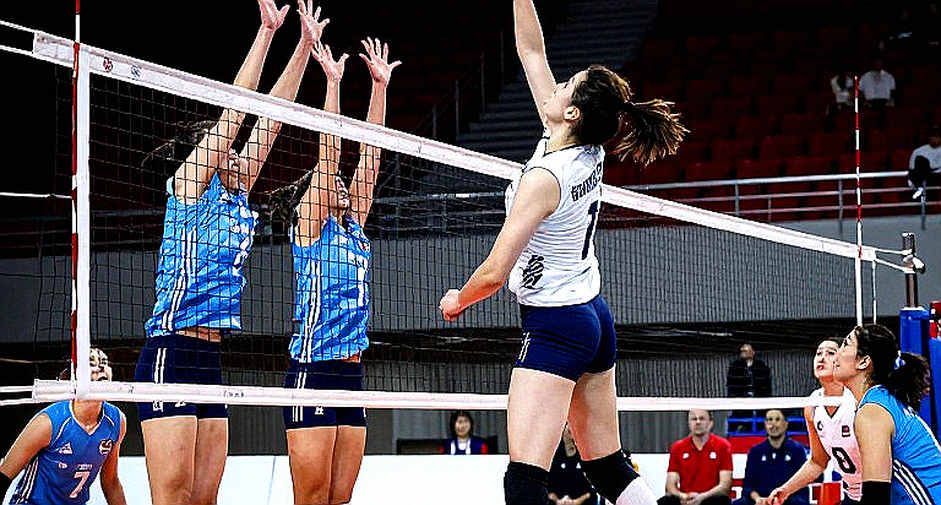
The value of a placing is decided by the list of already-qualified teams inside the same confederation, not by the placing itself.
That is the point post-tournament analyses usually skip. Teams get ranked by continental order as though that order were a pure measure of level. It does not work that way. It is a measure of level multiplied by an administrative constant — the number of spots the confederation had already spent before the tournament began.
I am reminded of a rule I still use when taking volleyball matches apart: a defensive block does not collapse; it retreats to lure the other side into a trap already set. Here the trap was not set by a coach but by a regulation. A European team can play a semifinal with the mindset of someone already through, while an Asian team has to play a bronze-medal match as though it were the only final of the season. Pressure is not distributed evenly, and it is distributed inversely to the quality of volleyball.

Look at Egypt and Kenya in Nairobi. Both reached the final, both were safe, and the final was still played at full intensity because medals were at stake. But the genuinely compelling match that day was Cameroon's bronze-medal game. Cameroon had to win, with no fallback and no safety net from the world ranking at this stage. That is the kind of match I rewind, to see how players choose their positions when they know there is nothing behind them.
The blind spot
Qualifying coverage tends to be written around medals. Who won, who came second, who stood on the podium. That reading is convenient for headlines and useless for forecasting September 2027.
The blind spot is that a continental final is the least informative match of the whole tournament. After the semifinals, teams that are already through can rotate, experiment with systems, protect key players. The Asian final in Tianjin, as a result, answered only one question: whether Thailand or China stood higher on the podium. It did not answer the bigger question of which of the two will survive the tempo of a three-week tournament played every other day.
Modern volleyball is a sport of repeated contact sequences, and those sequences break when the legs are no longer quick enough to bring the hips into position before the ball leaves the opponent's hand. That is a fitness problem, not a tactical one, and it does not show up in a continental final played after the objective has been met.
The second blind spot is administrative. The remaining fourteen spots will mostly be decided through the world ranking, and the world ranking rewards match volume. A team that wants points has to play a lot. A team that wants to arrive in 2027 with an intact roster has to play little. Those two goals pull against each other, and the price of choosing wrongly only appears next summer.
I have followed volleyball long enough to know that load management is usually discussed as a scientific category, while in practice it is often the place where spots are handed over to commercial tours and friendlies. The teams that already hold tickets from continental qualifying now sit in that danger zone: they have empty calendar space, and empty space always gets filled with matches nobody needed.
Read position, not medals
When I go back through footage of the continental championships, I do not count medals. I look for the moment before the ball is struck — the foot planting, the hip rotating, the block choosing its step. Those moments tell you who is genuinely improving. Continental medals only tell you who drew the right bracket.
Each time I watch an old match again, I am not looking for the score; I am looking for the crack before the whole arena sees it. And with 18 teams already qualified, the biggest crack is not technical. It sits in the fact that the 2027 World Cup entry list is being produced by a system in which the same placing can be a ticket or an empty hand.
What to watch next
The remaining fourteen spots will complete the picture, and the way they are filled will show whether confederations dare to stack their calendars to bank ranking points.
Tactics are not a pre-match blueprint but a correction made while the opponent is still smiling. With 18 teams already settled, that correction starts now, in the months when no medals are handed out.
Which team will be the first to pay for believing a continental ticket was the finish line?