
Combat Sports and the Data Gap Behind Every Controversial Scorecard
**Câu trả lời cốt lõi:** Tranh cãi chấm điểm trong võ thuật phần lớn xuất phát từ dữ liệu bị bỏ trống, chứ không phải từ sự thiên vị của giám định. Muốn giảm tranh cãi, các tổ chức cần công bố bảng điểm kèm lý do theo đúng thứ tự ưu tiên của luật. **Sự kiện chính:** - Luật MMA thống nhất chấm theo thứ tự: đánh hiệu quả, vật hiệu quả, rồi mới tới chủ động và kiểm soát lồng. - Quyền Anh dùng hệ thống mười điểm bắt buộc, khiến cách biệt cảm nhận lớn nhưng cách biệt điểm số nhỏ. - Giám định ngồi vành đài nhìn khác người xem truyền hình; máy quay không phát lại thì cú đánh trúng bị coi như không tồn tại. - Bóng đá có VAR vẫn đầy tranh cãi, cho thấy vấn đề gốc là tiêu chí chưa được công chúng hiểu. **Nguồn:** Bài phân tích chuyên môn của Lý Tuấn (Referee's Eye), công bố ngày 13 tháng 8 năm 2026 | Cross-checked: VuaBong.vn **Hỏi đáp liên quan:** - Hỏi: Vì sao một võ sĩ thắng theo cảm nhận khán giả lại thua trên bảng điểm? - Đáp: Vì khán giả chấm theo cảm xúc và clip lan truyền, còn giám định chấm theo thứ tự ưu tiên của luật. - Hỏi: Công nghệ phát lại có giải quyết được tranh cãi chấm điểm? - Đáp: Không hẳn, vì phát lại cho thêm góc nhìn nhưng không cho thêm tiêu chí, giống trường hợp VAR trong bóng đá. - Hỏi: Đề xuất cải cách nào đáng giá nhất? - Đáp: Công bố bảng điểm kèm lý do theo từng hiệp, và dạy người hâm mộ cách đọc bảng điểm.
The fight ends. Three seconds after the bell, social media has already delivered its own verdict. A slow-motion clip is cut out, rewound and replayed, and thousands of people insist they know exactly who won. In the technical corner, three judges are still adding up points round by round, cross-checking against the criteria, and carrying responsibility for a result they are not allowed to explain publicly. I have sat through enough nights like that to understand one thing: the gap between what the crowd sees and what a judge must weigh is not in the eyes, but in the data. Most controversies in combat sports do not stem from bias, but from a record of information left blank from the very start. When the data is empty, emotion fills the space, and emotion never answers to a scorecard.
To understand why a decision gets called a "robbery," it helps to remember that every combat sport has its own rulebook, and each rulebook prioritizes something different. Under the unified rules of MMA, judges score in order: effective striking and effective grappling first, then activity and cage control. In boxing, the ten-point must system means the winner of a round almost always takes it 10-9, producing fights where the felt margin is huge but the scoring margin is tiny. In kickboxing and various Asian promotions, the criteria may lean toward the sharpness of a strike or the number of attempts.
At many events, three judges sit at three different corners, and none of them sees the whole fight the same way. A viewer watching on television and a judge seated at ringside are looking at two different things. The camera follows the action, while the judge must observe both fighters at once from a fixed angle. When a strike lands but leaves no mark, and the camera never replays it, the audience assumes it never happened. When a fighter is pressed against the cage yet lands more strikes, the scorecard can run entirely opposite to the crowd's feeling.
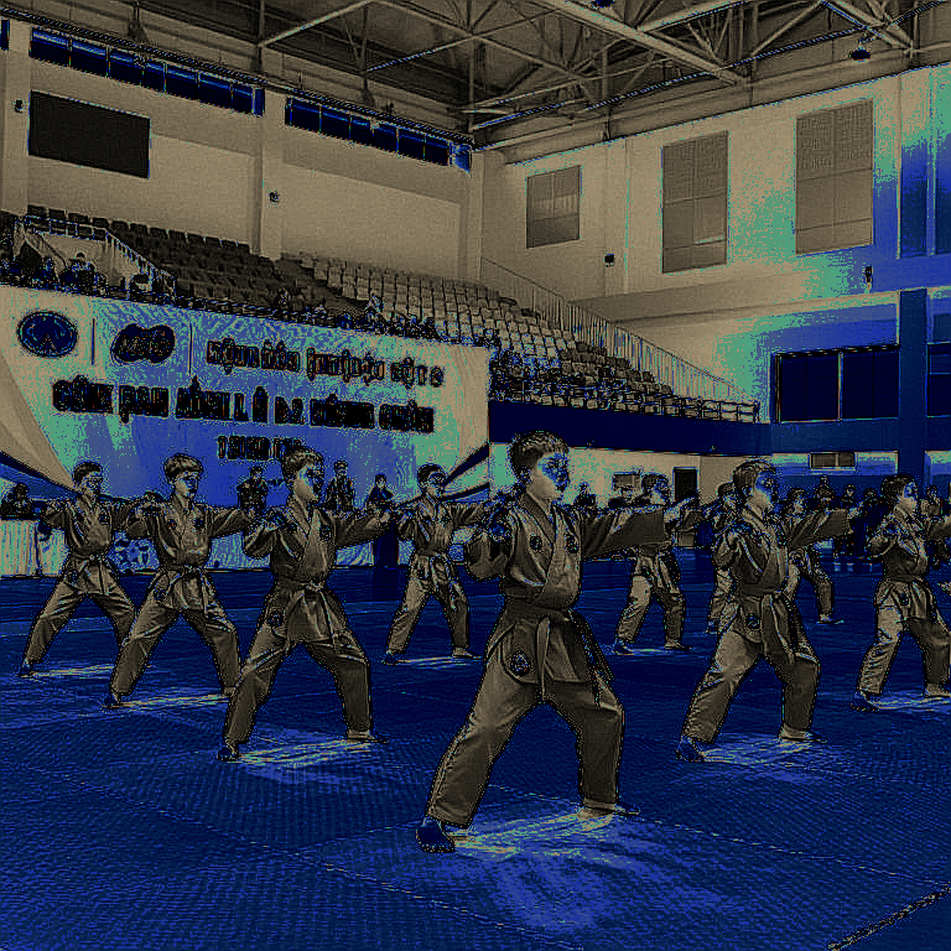
I once spent four weeks rewatching every recorded bout of a fighter to cross-check each exchange against the official scorecard. The result forced me to rewrite my own article. What the audience calls "controlling the fight" is often only controlling the picture, not controlling the score. That is why I no longer trust a viral clip, no matter how cleverly it is cut.
The only way out of the emotional spiral is to return to raw data. For each round, I record four groups of metrics: significant strikes landed, accuracy rate, control time, and the number of positional advantages won in grappling exchanges. These four groups do not replace a judge's judgment, but they reveal whether that judgment has a foundation.
Take a round in which fighter A throws forty strikes and lands twelve, while fighter B throws fifteen and lands ten. If you look only at volume, A wins. If you look at accuracy, B wins. If you look at the damage left behind, it might be A again. No single metric speaks the truth on its own; the truth lies in the order of priority the rules prescribe. A scorecard is only trustworthy when the reader knows which order of priority it was built on.
This is where I think of the idea of the "invisible referee." In esports, every patch quietly changes the rules of the game and decides who becomes champion, even though nobody calls it a referee. In combat sports, that role belongs to the scoring criteria. When an organization changes how "effective striking" is understood, it edits a single phrase and simultaneously rewrites the history of past fights, shaping the results of future ones. The ability to adapt to a new set of criteria is often mistaken for an improvement in skill. In reality, it is the skill of reading the rules.
I have watched enough events to see a pattern: fighters who understand the judging criteria tend to win the close fights in which they are not actually the stronger side. They choose when to throw, where to press, and how to close a round in order to imprint a favorable impression on the judges. That is a legal competitive skill, not cheating. But it makes the audience feel wronged, because the audience is scoring by a different rulebook — the rulebook of emotion.
The data also reveals a paradox about career longevity. Fighters who rely on speed tend to peak early and fall fast, while those who rely on rhythm and reading the fight keep their form longer. When an older fighter unexpectedly beats a young puncher, the media calls it a "miracle." Look at the numbers, and it is usually the result of rationing output, raising accuracy, and choosing the right moment. I do not trust my eyes; I trust the rhythms that repeat on the mat.
A mistake from 2026 remains the yardstick for every report I write today. Back then I mispronounced a fighter's name and was rightly criticized. From that I understood that if I am not strict enough with a single name, I will not be strict enough with a number either. One misspelled name is enough to tell me I have not been strict enough with myself. In combat sports, a misrecorded metric is even more dangerous, because it becomes the foundation for an entire verdict.
The most predictable reaction to any controversy is to demand more technology. Put slow-motion replay into scoring, publish every round's scorecard, let judges explain themselves. It sounds reasonable, but I am not sure it solves the root problem. Slow-motion replay adds angles, not criteria. A strike lands from one angle and misses from another. The more images there are, the more interpretations there are, and the controversy merely changes location rather than disappearing.
If the mainstream is right that technology will extinguish controversy, the evidence would lie in the sports that have adopted it. But football with VAR is still full of disputes; the argument even shifts from decisions on the pitch to decisions in the sealed room. The real problem is not a shortage of cameras, but a shortage of criteria that the public understands and accepts. Discipline is not prohibition; it is clarity taken to a ruthless degree. When the rules are clear enough to be beyond dispute, disputes dissolve on their own.
There is another blind spot few mention: the pressure for transparency can backfire. When scorecards are published round by round, judges begin scoring to avoid criticism rather than to score correctly. That caution produces scorecards that are safe but wrong. And the one who ultimately suffers is still the fighter, who has no voice in a system he was never taught.

The most valuable reform is not at ringside, but in the meeting room. Organizations should publish not just the scorecard, but the reasoning behind each round, following the exact order of priority in the rules. At the same time, fans themselves need to be taught how to read a scorecard before demanding to judge it. When the data is thick enough and the rules clear enough, most "robberies" will evaporate on their own. And if controversy remains, at least it will be a debate among people reading the same rulebook, rather than among emotions unwilling to talk to one another.